I’ve accumulated a treasure trove of stories over a lifetime. This “story” is one of my favorite essays in my book The Power of Relationships. As I tread through the latter half of life and watch Millennials and Generation Z make their mark, my passion for personal storytelling—and the spontaneous musings that arise during conversations with friends—continue to shape my digital essays. In the end, the reader or listener becomes my messenger. How my stories make them feel, reflect, or respond becomes the essence of my narrative.
I often weave personal experiences into conversations, always careful not to overshadow or “one up” the moment. More often than not, I become a storyteller, drawing from life’s rich tapestry of decisions, missteps, small victories, and the occasional lucky break. My mind springs to life, crafting stories that highlight the situation at hand—whether face-to-face, on a Zoom call, or even during a good old-fashioned telephone chat. But text messages? Too brief, too transactional. Storytelling deserves breath.
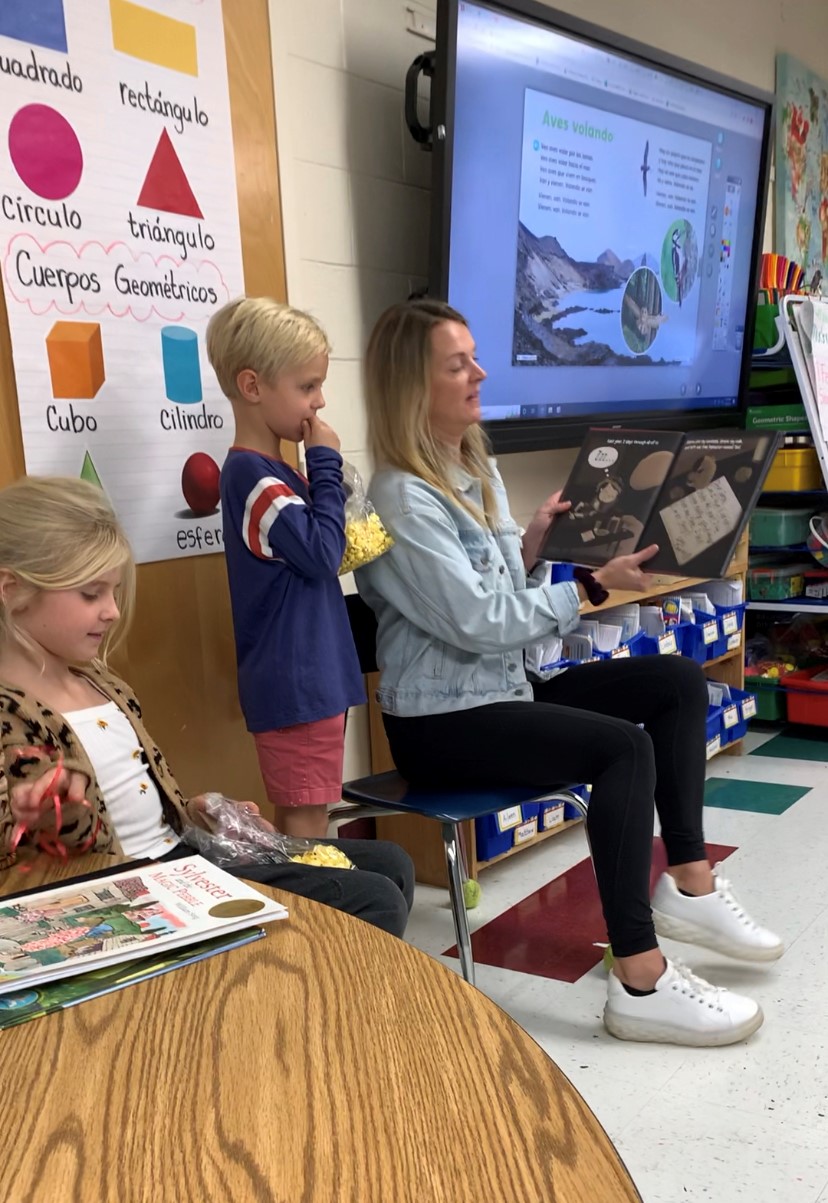
My love for stories knows no bounds—my own, someone else’s, profiles I read, articles that captivate, or books that explore the depths of human experience. And there is something magical about children and stories: watching my daughter read aloud in my grandson’s classroom reminded me how early the seed is planted. Stories, stories, stories.
Adam Garfinkle, PhD, articulates this beautifully:
“Parents reading stories to children kickstarts a life of reading and writing—which, in essence, is storytelling.”
He explains that shared attention between reader and child links words, sounds, and meaning in a way no screen ever could. The best predictor of future reading proficiency, he notes, is simply how many hours a child spends listening to a storybook in the hands of an adult.
And although I often rave about nonfiction, I’ve developed a real appreciation for the extraordinary stories penned by Ernest Hemingway, Herman Hesse, Elbert Hubbard, Ayn Rand, Arthur Miller, and Mark Twain. Garfinkle again nails the idea: “Deep reading widens our theory of mind. Fiction, in particular, enables us to simulate the consciousness of another person.” Perhaps that’s why The Old Man and the Sea and The Fountainhead moved me so deeply.
One of my favorite magazine pieces—introduced to me by a friend—is Nenan Ganesh’s “The Devil and Roger Federer,” a gem I return to often.
Great Storytellers: From Joe Slade White to Abraham Lincoln
Some stories aren’t just written—they’re lived. When political advisor Joe Slade White passed away, his obituary read like one of the campaign commercials he was famous for crafting. A close acquaintance, Rick Reinhard, often told me about Joe’s gift for blending humor, simplicity, and emotion into persuasive storytelling. His own handbook for client success listed “tell a compelling story” as step one.
Reading about Joe Slade White brought me back to another storyteller who mastered the craft long before television, radio, or social media—Abraham Lincoln.
In Doris Kearns Goodwin’s Team of Rivals, Lincoln emerges not simply as a statesman but as a natural-born storyteller. He disarmed critics with humorous anecdotes, calmed tempers with parables, and illuminated complicated political arguments through simple frontier allegories. His ability to hold an audience—whether in a packed courtroom, a crowded tavern, or a late-night cabinet meeting—was legendary.
Goodwin describes how Lincoln used stories to connect, persuade, defuse tension, and make people feel seen. In a room full of brilliant and ambitious rivals—Seward, Chase, Bates—Lincoln’s storytelling was his superpower. It helped get him elected, united a fractured cabinet, and, at times, kept the country itself from unraveling.
In the span of American history, few leaders have demonstrated so clearly that the way a story is told can determine how a nation responds.
The Stories We Inherit
Parents—without question—are among the greatest storytellers. Their narratives shape our earliest memories and our first encounters with what it means to imagine, listen, absorb, and retell. They’re the foundation of all later reading, writing, and understanding.
And let’s be candid—some stories get better with age and just a little embellishment. I’ve told my high school Ron Schiappa spitball story well over a hundred times. By the 50th retelling, it had spies, secret codes, and an escape plan. But that’s the beauty of storytelling: as long as the essence remains true, the details are allowed to stretch. It makes the moment funnier, the lesson sharper, and the story more memorable.
A Tradition Continued
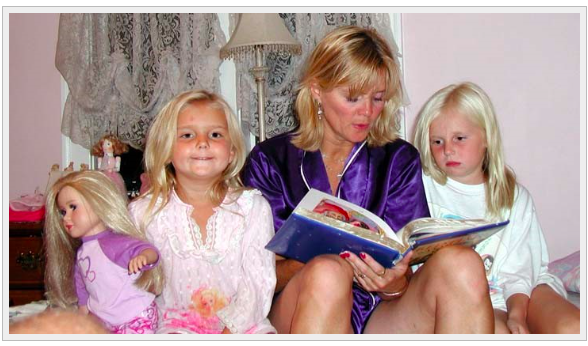
My oldest daughter, Kelly, reading stories to her children—Eloise and Kreuz—is more than just a sweet family moment. It’s the next link in a chain. The foundation of a life of reading. Another generation learning to listen, imagine, question, and someday tell stories of their own.
Because storytelling isn’t just how we entertain—it’s how we connect. It’s how we teach. It’s how we remember. And it’s how we live on, long after the final page.
 josephkreuz.com