Mission accomplished: the Christmas cards are out! It’s no small feat—more like a marathon of creativity, logistics, and perseverance. First, there’s the final design, the anticipation of delivery from the publisher and the battle of the address list. I stay in my lane; the design is not in my job description—and never will be. Correcting addresses for the umpteenth time has become a holiday tradition in itself. List management is crucial: adding new friends, loved ones gone, and having that awkward “should we really still send them one?” moment.
Eloise might just make the Christmas card next year
And then, there’s the question: why do we send cards to old bosses or people we might not even like anymore? But isn’t that part of the season’s magic? The spirit of Christmas nudges us to rekindle connections, soften the edges of strained friendships, and perhaps even surprise someone who thought they were forgotten.
Next comes the production line: return address—front or back? Choosing the perfect Christmas stamp (adhesive or licked?). And wow, when did stamps get so expensive? Stuffing the envelopes with precision. And let’s not forget the dreaded envelope licking. Sorry, but those water contraptions? Useless. They warp the cards and steal the joy. Yes, licking is unpleasant, but tradition demands sacrifices. Paper cuts? They’re part of the journey.
And let’s call them what they are: Christmas cards. This widely celebrated holiday transcends borders and beliefs. It’s a shared tradition, a universal gesture of connection.
The silver lining of this annual ritual is reconnecting with friends and reflecting on those we’ve lost. Updating the list becomes a bittersweet exercise: deciding to keep one family member while leaving out another, or pausing to honor the memory of a loved one who’s passed on.
For me, the true joy comes from sitting side by side with my wife, assembling our cards while thinking of all the people who have touched our lives. And then there’s the incoming stream of cards! They arrive in a delightful variety of styles: updated family photos, handwritten notes, humor, and heartfelt messages. Some feature collages, while others stick to one perfect picture.
The big question: does the boyfriend or girlfriend make it into the photo this year, or are they left out? And, of course, the excitement when a new family member makes their debut on a friend’s card—a baby, a pet, or sometimes even a spouse who wasn’t there last year.
The mother lode usually arrives on December 22nd, with a flurry of deliveries that bring the kitchen counter to life. Then comes my favorite tradition: the annual “Best Late Card” award. It’s December 27th and we’ve already received five really good ones. It’s for the friend whose card arrives fashionably late, often with the disclaimer, “This year, we’re finally on time!”
Once Christmas arrives, the cards take on a new life. Displayed on the refrigerator, kitchen cabinets, or a special mantle, they become part of the holiday decor. Every visit to someone’s home becomes an opportunity to scan their display. Inevitably, there’s the moment when you spot an absence: “Wait—why didn’t we get a card from them this year?!”
And one of my proudest moments? Seeing our family card make it to the mirror of fame at my barber’s shop. It’s like a badge of honor, knowing our card sits alongside others in a place where conversations flow and connections are celebrated.
For me, the Christmas card represents more than just the joy of the season—it’s about connection. It’s a tradition that reminds us to pause and appreciate the people in our lives, to share laughter and memories, and to celebrate the love that surrounds us.
Happy Christmas—and may your cards be on time (or at least arrive with a fashionable excuse)!
I can still vividly recall the magic moment when I learned to read in the first grade. It was transformative—right up there with learning to swim or the thrill of riding a bike for the first time. It felt like unlocking a new world of possibilities. Yet, for much of my early years, reading didn’t take center stage. The only books I remember from grade school and high school were assignments like A Tale of Two Cities, which left little impression. To get by, I often relied on Monarch Notes. My early reading repertoire consisted mainly of sports biographies: For some reason the two I remember are a story about Bobby Chandler of the Buffalo Bills and another about Jerry Kramer’s Instant Replay: The Green Bay Diary of Jerry Kramer.” Co-written with sportswriter Dick Schaap, an account of his near-death experiences and life as a Green Bay Packer. Beyond those, reading didn’t play a significant role in my life—until my early thirties.
Everything Changed at Age 34 At 34, my perspective on reading shifted entirely. My business partner walked into my office with a eclectic stack of ten books as I navigated a one-year non-compete clause after leaving my job. With time to consider and grow, I turned to those books and found my world expanding. The first book I picked up was Harvey Mackay’s Swim with the Sharks Without Being Eaten Alive. I remember reading it during one of my daughter’s gymnastics meets, making notes on Mackay’s famed McKay 66 customer insights, and sharing them with my father, the consummate salesman.
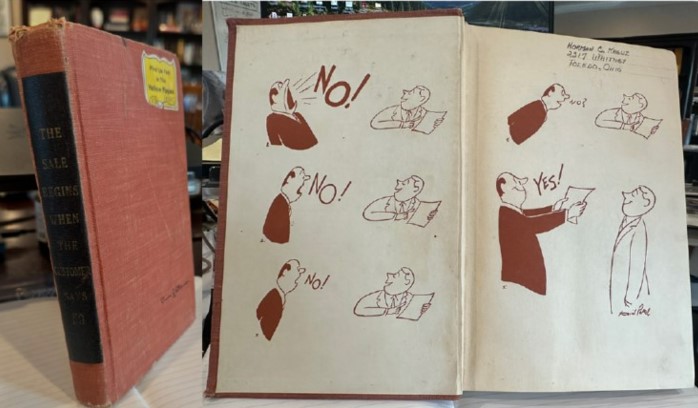
My dad then showed me the book he read, The Sale Begins When the Customer Says No, published in November 1953. The copy he shared, filled with humor and practical wisdom, offered a fascinating look at the sales principles he embraced in his career. This classic predates Harvey Mackay’s work and made me wonder if Mackay had drawn inspiration from it. Seeing the connection between these works reinforced the timeless nature of great ideas and their ability to shape generations.
That stack of books became a gateway to a new mindset. Titles like Seven Habits of Highly Effective People, In Search of Excellence, Swoosh: The Story of Nike and the Men Who Played There, and Herman Hesse’s Siddhartha inspired me to think deeper and apply their lessons to my life. That year helped me develop a habit of reflective, deep reading—equating insights from books to real-life scenarios. It truly was a new experience and my new walkabout was afoot.
A New Era of Reading Reading soon became a daily joy. Early mornings and airplane rides emerged as my favorite times to immerse myself in a book. A dozen or so friends of aspire to those peaceful, productive hours noted in my post on “The Early Risers Club.” I often reflect on how difficult it was to find quiet reading spaces during my high school years in a bustling household. Back then, the University at Buffalo Law Library became my haven for focused studying, even if it wasn’t traditional reading. Those moments honed my ability to concentrate and find value in written words.
Books That Stay, Books That Wait As I scan the shelves in my home, office, and Kindle history, I reminisce about the eclectic mix. Some books are unforgettable—like Ayn Rand’s Atlas Shrugged, a favorite that shaped my philosophical outlook and inspired its own dedicated article. It’s the only book I’ve ever read twice. After finishing it, I devoured The Fountainhead and watched the classic Gary Cooper adaptation. James Bradley’s The Imperial Cruise, Flags of Our Fathers, and The China Mirage, as well as Lawrence Wright’s The Looming Tower, were equally compelling, providing deep insights into historical and cultural contexts.
I also polished off McCullough’s John Adams and Harry Truman. McCullough’s depth of storytelling about generations past made me feel like I’d just completed a master’s class in U.S. history and almost finished with McCullough’s book about the Brooklyn Bridge. For that, I highly recommend all three books.
Some books, yet, stay unfinished. Titan: The Life of John D. Rockefeller, Sr. has eluded completion for five years, despite its fascinating content. I would’ve finished King Rat but I was channel surfing and came across the older movie version and that spoiled the rest of the mystery. Others, like A Man Called Intrepid, came into my life with a story of their own. A business partner’s unexpected departure prompted a friend to say, “The ones who stay are the intrepid souls.” That statement resonated deeply, compelling me to pick up the book. Then there are books like Rebel Ride that sit patiently on my shelf, waiting for their moment. I’ve often heard excerpts about Stonewall Jackson and wondered how the Civil War have unfolded had he not died in action.
The Erosion of Deep Literacy Adam Garfinkle’s article The Erosion of Deep Literacy helped me articulate the unique impact reading has on me. He defines deep literacy as the ability to engage with a text, anticipate the author’s direction, and connect it with personal knowledge to gain original insights. I often find myself doing just that—connecting characters and themes to real-life friends, colleagues, or situations. The article is worthy of a read for you deep thinkers so click here
Garfinkle also highlights how multitasking and screen use erode attention spans. While I occasionally pause my reading to research something sparked by a book, I’ve learned to embrace those moments as part of my curiosity-driven process. Still, I value the focused attention that deep reading requires, and I strive to cultivate it daily. My favorite digression is my Kindle’s access to a dictionary and Wikipedia.
Reading and Family Garfinkle’s assertion that shared reading builds a foundation for literacy resonates with me deeply. Cindy and I always read to our kids. Green Eggs and Ham was so frequently read to Kelly that she memorized it. One night, when I skipped ten pages while half-asleep, she immediately called me out. Today, our youngest would rather read a book than watch TV—a testament to the impact of those early reading sessions.
My mother-in-law, Gisela, is another source of inspiration. A devout reader, she once told me, “A good book is a great companion.” Her thirst for literature reminds me of historical figures like John Adams and Thomas Jefferson, who clamored for knowledge. Gisela’s love for reading has enriched my own appreciation for books as companions in life’s journey. If one of my books goes missing, I usually know where to find it.
Why I Keep Reading Books offer reflection, knowledge, and the joy of escaping into another world. Whether it’s Atlas Shrugged challenging my philosophy, Brooklyn Brifdge story on The Great Bridge drawing parallels between the Brooklyn Bridge and building a business, or Garfinkle’s insights about literacy, reading always teaches me something new. It’s a lens through which I understand the world and my place in it.
My library has also become a touchstone for connection. Office visitors often comment on the eclectic mix of books, sparking conversations that transcend the original context of their visit. It’s a reminder that books don’t just shape the individual—they also create opportunities for shared growth and understanding. I had the privilege of observing screenwriter Tom Fontana’s massive library, a collection I still talk about to this day.
Final Thoughts Reading has been a lifelong journey of discovery, from the first-grade magic of learning to read to the transformative moment at 34 that changed everything. Books are more than words on a page; they’re threads that weave together knowledge, relationships, and personal growth. Each one carries a story—how it came into my life, how it influenced my thinking, or how it waits patiently for its turn. Through them, I’ve learned that every story, like every life, holds lessons worth discovering. There’s always room for a constant companion—that being a good book.
So, when you’re done with Jake from State Farm and his late-night, “What are you wearing, Jake?” commercials, and you’re still basking in the peaceful solitude of an early morning, why not pick up that book you’ve been meaning to finish? Who knows, it can just offer more wisdom than any ad for affordable insurance.


 josephkreuz.com