📚 Summer Reading: A Rebellion Worth Leading
It’s sunny. It’s summer. Which means kids everywhere are perfecting the fine art of screen time avoidance… unless, of course, the screen is a PlayStation.

All my grandkids are in town. It’s a joy. And yet, as I watch them, I can’t help but reflect on the world they’re growing up in—a world where attention is fractured, screens dominate, and reading often takes a backseat.
As school winds down and summer kicks in, we find ourselves staring at a truth we’ve known for years: when children stop reading, they start slipping.
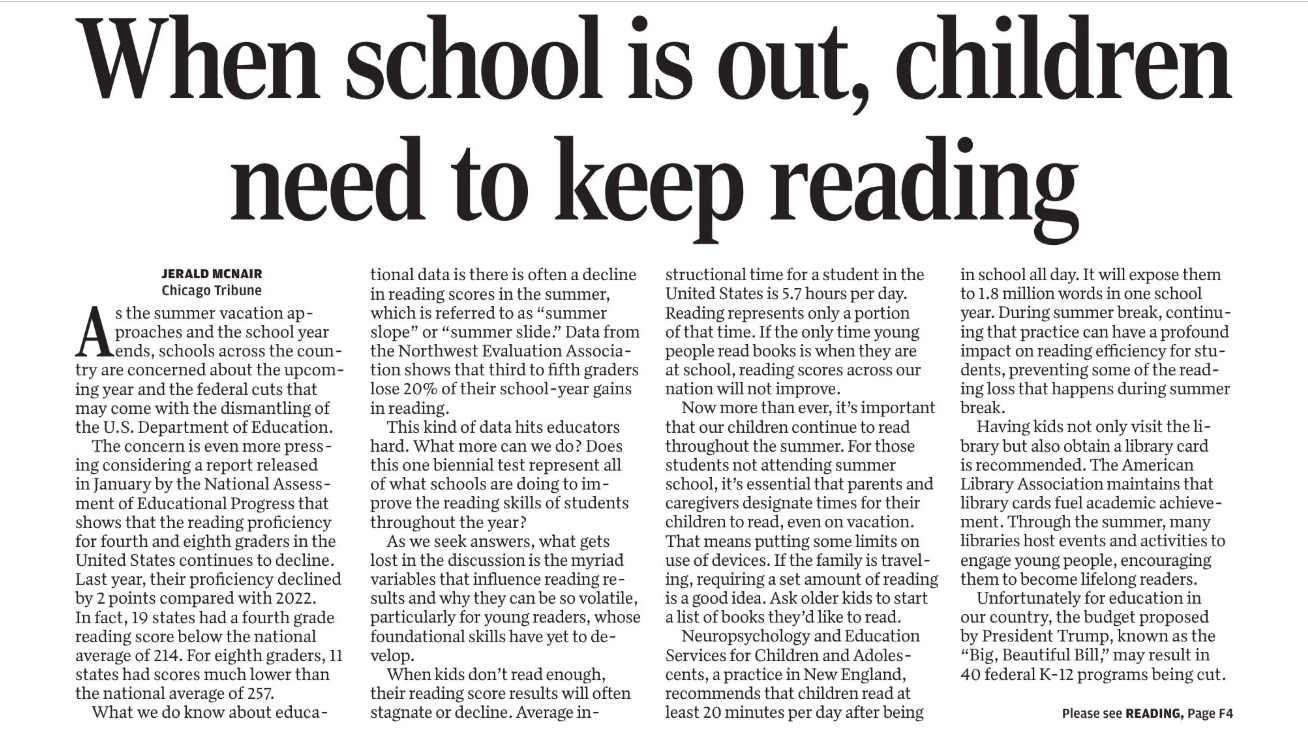
Jerald McNair’s recent op-ed in the Chicago Tribune—which appeared in today’s Buffalo News—delivers the data plainly. Reading scores for 4th and 8th graders continue to drop. “Summer slide”—the loss of reading progress over break—can erase 20% or more of what was learned. And once that momentum is gone, it’s rarely recovered. The Harvard Graduate School of Education even notes that after the first year of loss, little to no gain follows in the years that come.
So what do we do? We reframe reading as a cultural value, not just a school requirement.
I’ll be candid—I didn’t fall in love with reading until I was 34 years old. Better late than never. But once it clicked, it transformed how I viewed the world.
My friend Kevin Quinn, a lifelong reader with a degree in the classics, remembers his dad coming home from work in the 1970s and saying, “You’ve got two choices—go outside and play, or go read a book.” Growing up in Buffalo, Kevin chose books—especially when the cold kept him indoors.
For my own son, summer reading lists were the norm at his Jesuit high school. He’d spend most of the summer outside, living in the moment, but when August hit, he’d hunker down for a week of binge-reading to finish the list. It wasn’t always polished—but it built a muscle. And today, he still reads.
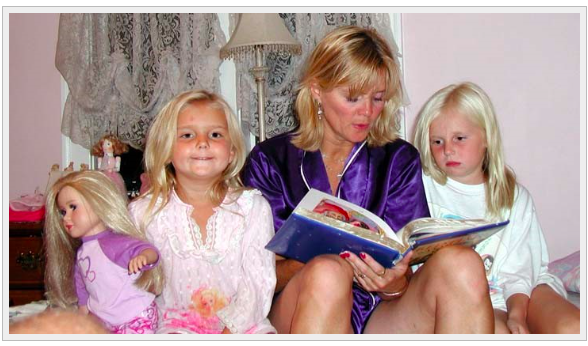
Now I see my grandkids—members of Generation Alpha—growing up fully immersed in digital devices. They’re bright, curious, and full of energy. But they need guidance to guard their attention spans. We try to encourage books alongside play, and we gently limit iPad time. It’s not about banning technology—it’s about giving reading a fighting chance to remain part of their rhythm.
And influence runs in both directions. My son now has the chance to shape the habits of his nephew—my 9-year-old grandson—who, like many kids his age, is a little too into PlayStation. Sometimes, the best messages don’t come from a parent—they come from an uncle, a cousin, or a grandparent. Maybe all it takes is a simple challenge: “Read for as long as you play.”
We could take a page from Malcolm Gladwell, who once wrote about how the American Cancer Society didn’t just raise awareness through commercials—they sparked a movement through community conversations. Hair salons were a key part of that success. Imagine if we took that same approach to reading. One real conversation. One bedtime story. One Kindle subscription. One nudge from a family member. It might just be enough.
If you’re still wondering why this matters, I point you to Garfinkle’s powerful whitepaper, The Erosion of Deep Literacy. It’s not just that fewer people read—it’s that we’re losing the ability to think deeply, empathize meaningfully, and analyze critically.
In a world addicted to quick takes and TikTok loops, reading remains our most underrated rebellion.
So this summer, forget flashy campaigns. Just ask your kids—or your grandkids—what they’re reading. And if they’re not, you’ve got a few choices: hand them a ball, set limits on PlayStation, or better yet—set a goal: read for as long as you play.
 josephkreuz.com