When I get the call to head a leadership transition, particularly at the C-suite level, I don’t arrive assuming the answer. I arrive with curiosity — and two books under my arm: Built to Last and Good to Great. I don’t cite them; I carry them as reminders. Reminders that leadership decisions are legacy decisions. The person chosen will shape not only financial performance, but culture, identity, and the narrative of the organization’s future.
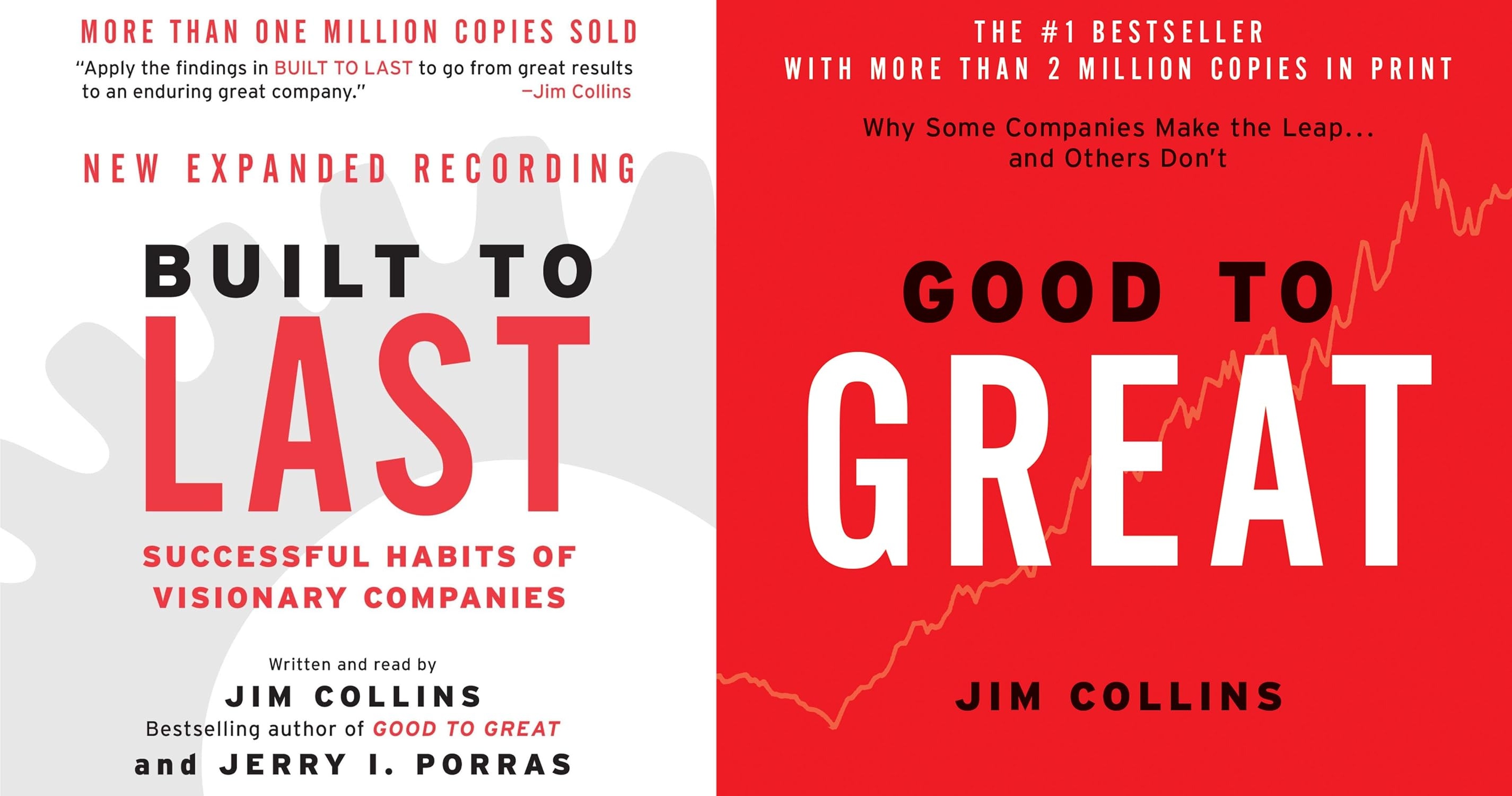
I recall sitting with Mark Hamister years ago. He was a diehard reader of both books and a believer in what they stood for. Mid-conversation, he stopped me and asked, “Did you read them both?”
“Of course I did.”
“Which one did Collins write first?”
Built to Last.
I passed the test. He nodded — and we both agreed that the two books, in many ways, contradict each other. Built to Last celebrates internal continuity. Good to Great argues that companies become exceptional by bringing in Level 5 leadership — often from the outside. The truth is, both are right. And neither is right all the time. Mark hired from the outside — and that leader guided the company successfully for fourteen years.
That is the decision every organization must face: Do we promote from within, or do we look outside?
Some leaders believe deeply in developing their own. Others are convinced that real change must come from beyond the walls. Both instincts can be wise. Both can be misguided. The mistake is treating the choice as automatic rather than deliberate.
In most searches, I begin with the internal #2 — the leader who has been there through the battles, who knows where the organization has been and where it stumbled, who carries the institutional narrative almost subconsciously. Their insight is rarely loud, but it is deep. I sit with them and say what is almost never said aloud: You are a real candidate. I am your advocate just as much as I am for anyone outside this building. You have not earned the job by tenure — but you have absolutely earned the right to be seriously considered. It changes posture. It restores dignity. And it creates space for truth.
I once met an internal #2, Mike Buffamonti, CFO of Dynabrade, who came into our first meeting with a binder — not as a performance prop, but as preparation. We scheduled two hours. We spoke for four and a half. He walked me through the organization’s history — not the glossy brochure version, but the truth: the hard decisions, the setbacks, the proud wins. And then, in the final hour, he stood and presented something he had crafted quietly and privately: Where We’ve Been. Where We Are. Where We Could Go. He didn’t speak from his department’s vantage point. He spoke from the balcony — at the altitude of the enterprise. He didn’t ask for the job. He demonstrated readiness for it. The board came to the same conclusion I did: the right leader was already in the building. And he beat out a formidable CEO from an iconic global company.
But readiness is not always immediately visible. Doris Kearns Goodwin tells a remarkable story in Team of Rivals. When Abraham Lincoln was nominated for president in 1860, the New York Herald mocked the choice:
“The conduct of the republican party in this nomination is a remarkable indication of small intellect, growing smaller. They pass over… statesmen and able men, and they take up a fourth rate lecturer, who cannot speak good grammar.”
— The New York Herald, May 19, 1860
Lincoln did not come from pedigree or polish. But he carried clarity of purpose and moral steadiness. The world often underestimates the leaders it most needs.
There are also moments when no internal successor exists, and the organization needs a different voice. I once ran a national search where the final two candidates were so evenly matched you could have flipped a coin. Both were capable. Both were respected. Both would have succeeded. What broke the tie were the references — specifically, how each candidate’s past actions aligned with the company’s long-term strategy and shareholder direction. The candidate who ultimately won didn’t win because they were “better.” They won because their lived experience fit the organization’s future. That choice strengthened shareholder value and accelerated performance.
And then there are transitions where value cannot be measured on a spreadsheet. OLV Human Services reached such a crossroads. The scoreboard wasn’t margin, growth, or earnings. It was human outcomes. Lives. Families. The internal leader, Cindy Lee, didn’t lobby for the job — she simply lived the mission. She understood her community. She carried the culture. The right answer was clear not because she “deserved it,” but because she embodied it. Promoting from within was the only choice that honored the soul of the organization.
Different organizations measure value differently.
Shareholders measure return.
Leaders measure momentum.
Communities measure trust.
Nonprofits measure human impact.
Leadership is not decided by loyalty alone or innovation alone. It is decided by fit, readiness, character, and alignment with the future.
There are different ways to measure value. And it is not always about the bottom line.
Leadership is stewardship. And the right leader is the one who carries the story forward — steadily, responsibly, and with the wisdom to honor where the organization has been and where it is called to go next.
So whether it’s Built to Last or Good to Great, both have a seat at the table in the selection process.
 josephkreuz.com