Only in Hindsight
This essay deserves its own chapter after my Volcker essay. It’s Black History Month, and my close friend Don Jones recently spoke in Tulsa to a convention crowd reflecting on moments that reshaped American history, including events from more than 100 years ago. He spoke about the 1921 Tulsa Race Massacre — the destruction of what had been known as “Black Wall Street,” where more than a thousand homes and businesses were burned and thousands were left homeless overnight. More than a century later, leaders like Don continue to return to this story not only for its relevance, but for the hard questions it raises about courage, responsibility, and civic virtue in today’s landscape. This essay, like others, only makes sense later.
For many Americans, Tulsa is a story discovered long after the fact — another reminder that history often hides in plain sight until a later generation is ready to confront it. Unlike economic crises measured in interest rates or unemployment, Tulsa represents a different kind of Black Swan — one that challenged the country’s moral foundation rather than its financial system.
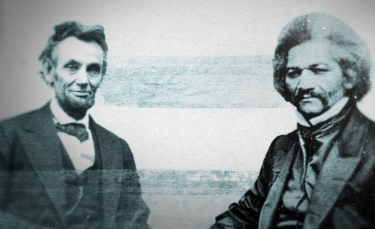
Talking to Don and understanding his reflections made me realize something: every era carries events that only reveal their full meaning decades later. Volcker’s fight against inflation reshaped the economy. COVID reshaped how we live and work. And Tulsa reminds us that history isn’t only about markets and policy — it’s about justice, memory, and the unfinished work of understanding who we are. Watching Don, an African American leader and admirer of Frederick Douglass, stand in Tulsa and name what happened on Black Wall Street, I realized I was seeing civic virtue in real time — the same kind of moral courage Douglass showed when he forced the nation to confront truths it wanted to ignore about slavery and freedom in his dealings with Abraham Lincoln and his cabinet during the Civil War era.
WWI had recently ended, and yet, after the shock of destruction and murder in Tulsa, just like after that brutal war, the country returned to work. Tulsa mourned. The nation kept going. Not because anyone fully understood what had happened, but because life demanded it.
Again, history repeats itself. It rhymes. Looking back across decades — Tulsa, Volcker’s inflation fight, COVID, the savings and loan crisis, the dot-com bust, 9/11, and the Great Recession — a pattern emerges. Every generation faces its own defining disruption. While we’re living through it, we rarely see the full picture. We feel the anxiety, the fear, the uncertainty. Meaning comes later.
Volcker’s story finally made sense to me not when interest rates were high, but when I had lived long enough to understand responsibility, restraint, and the cost of hard decisions. COVID may take years to fully understand as well. But it will shape a generation just as surely. The same holds true for “Black Wall Street.” Only in hindsight do we begin to see how these disruptions test not just our systems, but our souls. And if we are paying attention, they also reveal the quiet, stubborn virtue of people like Don, who choose to tell the truth anyway.
The real lesson isn’t economic. It’s human. Crises reveal character — in leaders, institutions, and ourselves. They remind us that stability is earned, resilience is learned, and understanding often arrives long after the moment has passed.
Every generation has its own Volcker, its own Tulsa, its own COVID — and, as Thoreau might argue, its own choice between quiet compliance and the hard work of conscience.
The question for all of us is simple: when the next Black Swan comes — and it will — what will we remember, and what will only make sense later?
 josephkreuz.com