When candidates know you’re not going to violate their trust—that you’re not out to sell them but to understand them—they open up. That’s when the real interview starts. It’s not about interrogation; it’s about listening with curiosity and intention.
After 41 years of interviewing people, I’ve developed a finely tuned ear—not just for what candidates say, but for how they say it. One phrase that always catches my attention is: “To be honest with you…”
When I hear that, my internal response—often said with a grin—is, “So, have you not been honest up to now?”
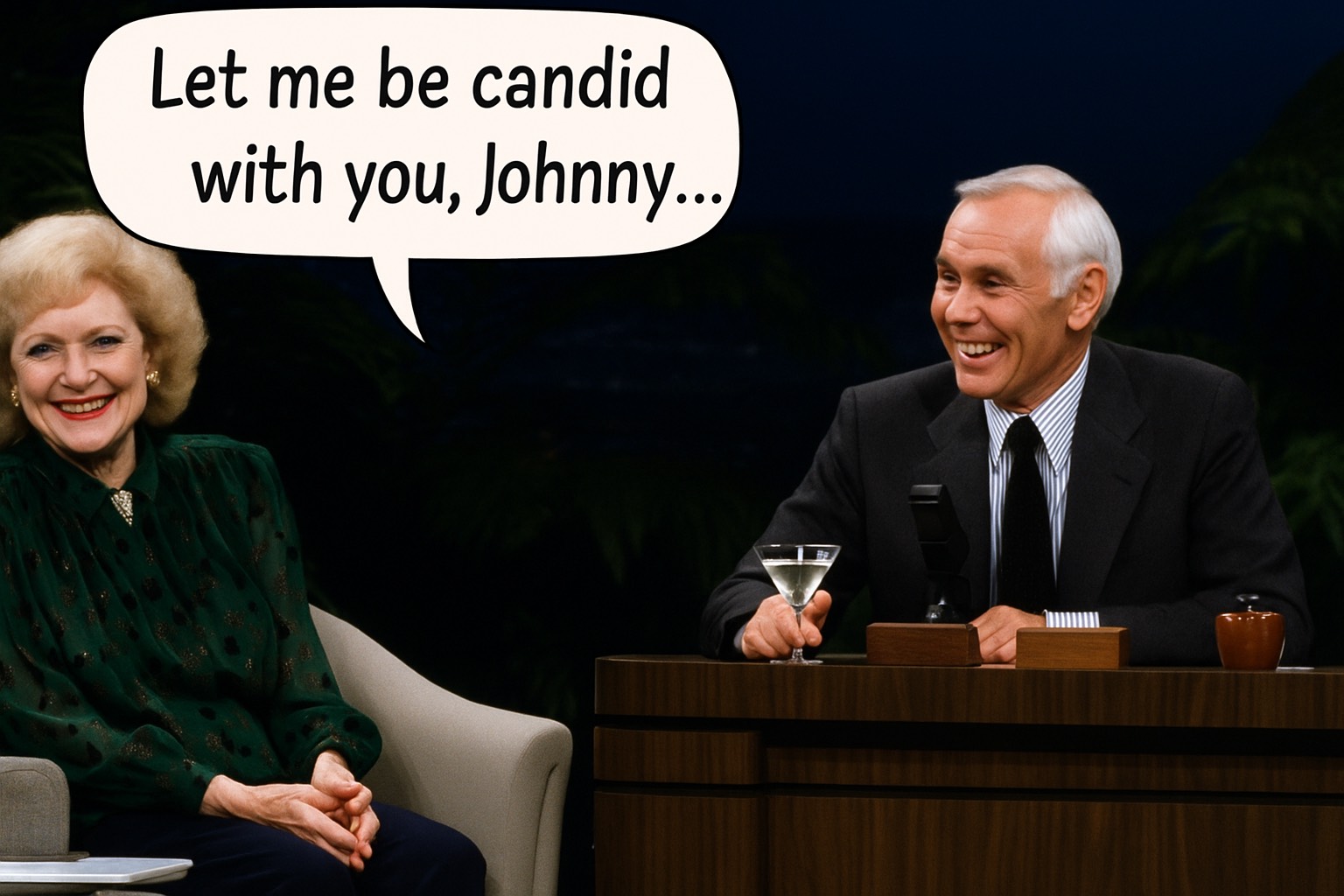
Over the years, I’ve used that moment to coach candidates. Instead of saying “to be honest,” I encourage them to say, “Let me be candid with you.” It’s more direct, less loaded, and doesn’t carry the unintended implication that dishonesty might be the norm.
Recruiting, at its best, is a business of trust. There’s a kind of “Code of the West” among great recruiters—where a handshake still means something, and confidentiality is sacred. You can’t build a reputation if people don’t believe their words are safe with you.
Great recruiters are great listeners. They know that trust isn’t built by talking, but by truly hearing someone’s story without interruption, judgment, or the need to “one-up” them. When a candidate shares a personal or professional experience—especially one that’s vulnerable or hard-won—the worst thing you can do is respond with a story of your own. That moment isn’t about you. I’ve always believed the best teaching tool in this business is the reminder: “You’ve got one mouth and two ears—use them in proportion.” The best interviews happen when you let silence do some of the work and allow the candidate to fill in the gaps. Listening is where the magic is.
And let’s not forget—when it’s story time, a good embellishment is often just the seasoning that gives a tale its flavor. The kind of story that sticks, that gets retold, that has a life of its own. This typically happens after the formal interview ends—during the meeting after the meeting—when you’re no longer just a recruiter and they’re no longer just a candidate. You’re more than a friend, less than a stranger. That space—built on trust, a laugh, and maybe a slightly exaggerated anecdote—is where real relationships are born. And it’s that power of relationships that’s held me in good stead since my days as a paperboy right up through today.
Yes, people fib. They exaggerate roles, downplay gaps, and sometimes float self-flattering stories. But part of the job is knowing how to spot the spin—and more importantly—how to steer the conversation toward truth without making someone feel exposed.
There’s an art to asking questions, just as there’s a science to pattern recognition. Over time, you realize that honesty isn’t just about what’s said—it’s about what’s earned. When people feel safe, they get real. And in a world of “to be honest,” finding the candid is gold.
Even legends open up after the interview ends
Author’s Note: A recent Buffalo News article by Bob O’Connor, titled “At least people are honest about how often they lie”, sparked this reflection. Bob shares personal stories and historical truths about the culture of lying, with humor and insight that’s well worth the read. His article reminded me of a phrase a former friend once shared with me: “If his lips are moving, he’s lying.” That line stuck. Over time, I’ve adapted it into my own go-to word—candid—because it feels fresh and sincere. And in recruiting, as in life, being candid builds the kind of trust that keeps relationships thriving.
What’s a group, you ask? Think of it as the ecosystem of your life—personal friend circles, professional associations, golf groups, happy hour huddles, clubs, boards, book clubs, and yes, those endless group chats where 90% of the content is memes, and the other 10% is someone asking, “What’s the plan?”
If only Android and iPhone would let you name these text groups, right? It’s a tragedy on par with daylight savings time, which is still confusing clocks and calendars everywhere. But let’s not dwell on tech shortcomings—this is about celebrating the joy of connection, the lessons we learn from each other, and the sometimes ridiculous (but always memorable) dynamics that emerge when people come together. Groups can also play a vital role in mental health, providing support, therapy, and a sense of belonging.
This post isn’t just about my groups—it’s about your groups too. It’s about celebrating the joy of connection, the lessons we learn from each other, and the sometimes ridiculous (but always memorable) dynamics that emerge when people come together. My inspiration? Pamela Say, author of Waking Up Grateful. Pam introduced me to the Social Change Model for Leadership Development she discovered while on walkabout at a UCLA think tank, an idea that sparked memories of all the groups that have shaped my journey.
Let me warn you: this isn’t just a nostalgic walk down memory lane. By the end, you’ll probably find yourself reflecting on your own groups—those you cherish, those you’ve left behind, and maybe those you’re overdue to reconnect with. Consider this your group therapy session, with a side of wit and wisdom.
Chapter one of AP Professionals and enduring get togethers
Key Takeaways from That UCLA Think Tank
Pam’s insights on the Social Change Model of Leadership Development offered two enduring lessons:
Shared Purpose Drives Connection: Groups thrive when members align under a common goal while embracing each other’s unique strengths and values.
Growth Sometimes Means Letting Go: Recognizing when it’s time to move on is as important as joining. Some groups, like relationships, naturally run their course.
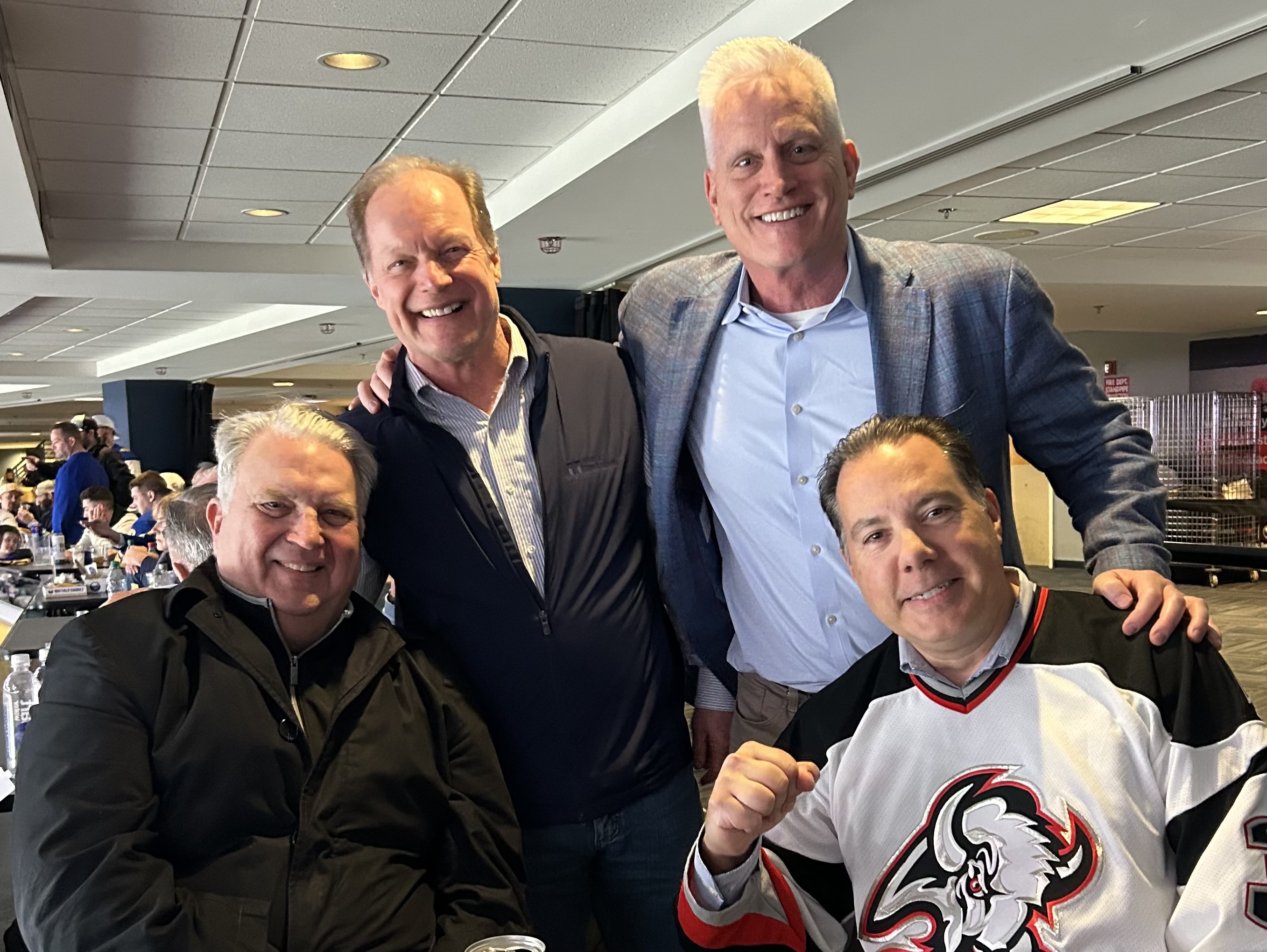
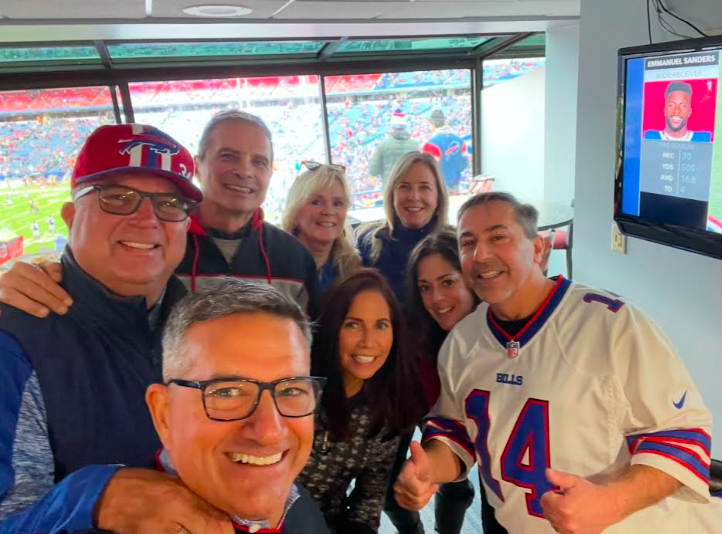
These ideas became a lens for revisiting the countless groups I’ve been part of—from little league football to professional networks. Each one taught me about relationships, resilience, and the importance of boundaries. My newest group was the highlight of the winter — gathered at a Buffalo Sabres game with Rick Hamister, Wayne Keller, and Nick Tzetzo. Nick stole the show in his classic Dominik Hasek jersey.
Rick Hamister, Wayne Keller, Joe Kreuz, and Nick Tzetzo at a Buffalo Sabres game — Nick arriving in a classic Dominik Hasek jersey and stealing the show. Some groups are just getting started.
Groups that forged my earliest bonds and taught me the value of collaboration and camaraderie.
Foundations of Friendship and Teamwork “From the field and the fairways to the future—where teamwork never ends.”
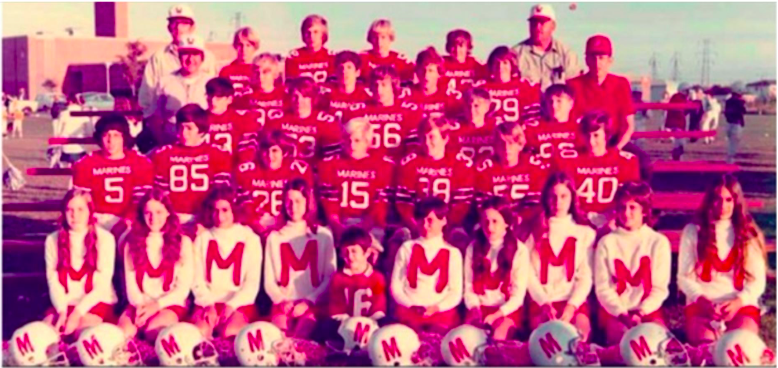
My journey began with my 7th and 8th grade little league football team, the “Marines.” Formed in 1971, this group instilled shared values of teamwork and friendship. Decades later, a vintage team photo and a lively group text keep those memories alive. It was my first experience with a group united by a shared purpose—learning football, winning championships, and fostering camaraderie.
Our team was guided by four eclectic coaches, each playing a meaningful role. Among them was Orkie Brown, our fitness coach, who ran the daylights out of us before and after practice. In those pre-Gatorade and water bottle days, we stood in line at the drinking fountain and water hose, further cementing our bond. We won a few championships, and I’ll admit to embellishing a story or two about our dominance over the years.
The Marines 1972
Fast forward to high school, and the Williamsville South High School Golf Team and University of Buffalo Golf team became another source of enduring friendships. Three years undefeated, three friends for life—our team wasn’t just about birdies and eagles but about building bonds that have stood the test of time. Whether on the course or in life, Rich Weber, John Gaffney, and I remain connected, even standing in each other’s weddings. Decades later, we’re still enjoying the links together, reliving the glory days with every round.
Professional Circles
Groups that shaped my career, offered mentorship, and inspired professional growth.
PriceWaterhouseCoopers (PwC) Alumni and the Pen Club “From the past to the present—connecting legacies, one swanky pen at a time.”
I owe my connection to the PwC alumni group to my mentor, Gary Stott, who introduced me to this circle of friends he had worked with out of college. Over the years, this group has remained a constant source of camaraderie and professional insight. At the 2024 PwC alumni golf outing, I was honored to be made an official honorary member—a testament to the enduring bonds formed through shared experiences.
The Pen Club, a subset of this alumni network, emerged during a dinner where I handed out some of my swanky company pens. The name stuck, and the group became its own unique gathering, rooted in shared values and lighthearted traditions. Whether on the golf course or around the dinner table, these groups continue to be a meaningful part of my professional and personal life.
And the Ernst and Young group dubbed the Caddyshack group offers further banter and story after story. Just stay away from the Zin.
The Pen Club get togethers never disappoint
Intellectual Exploration and Deep Conversations “Exploring ideas, igniting intellect, and dancing through life’s lessons.”
Intellectual groups have been a cornerstone of my personal growth, offering spaces for both philosophical debates and spiritual reflection. The Atlas Shrugged Society, inspired by my passion for Ayn Rand’s work, became a hub for deep intellectual exploration. Under the guidance of Alan Weisstein, PhD, as our Head of Wisdom and Intellect, the group challenges perspectives and fosters curiosity. Special thanks go to those who helped bring this group to life, making it a vibrant forum for thought and discussion.
Similarly, The Downtown Priest Committee, led by Father John G. Sturm SJ, added a spiritual dimension to intellectual engagement. Originating during my son’s time at Canisius High School, this group delved into Father Sturm’s teachings, often drawing on his book Life’s a Dance, Not a Dress Rehearsal. Together, these groups illustrate the value of ideas and the transformative power of shared learning.
Mentorship and Legacy Building
The Buffalo Renaissance Foundation: “Creating change, one charitable act at a time.”
This fraternal group, founded in the early 80s, has long been dedicated to raising and donating funds for charitable causes. I was fortunate enough to be invited in the mid-90s, and over 25 years later, I’ve had the privilege of witnessing its evolution into a multi-generational circle of philanthropy. Today, we’re a mix of Baby Boomers, Gen Xers, and Millennials, all working together to keep the faith, spirit, and mission alive—sometimes even agreeing on the same golf foursomes.
The group now boasts 70 members strong, with older members stepping back as “sustainers” to make way for fresh faces and new energy. Of course, the sustainers still have their say—they’ve earned it—and their stories often rival the length of our annual meetings. Our flagship events—the annual CEO awards luncheon and golf outing—are a blend of networking, inspiration, and the occasional good-natured debate about whose backswing needs the most work.
One especially memorable moment came during our tours of the Buffalo Bills and UB Bulls football operations. Members couldn’t resist hopping up to the podiums, striking poses in the locker rooms, and trying out the weight rooms—reliving their own glory days for a few unforgettable snapshots. It was a perfect example of the camaraderie and humor that define our group, even as we tackle serious charitable initiatives.
Whether it’s celebrating local leaders, teeing off for a good cause, or simply catching up over a round of drinks, The Buffalo Renaissance Foundation is more than a group—it’s a tradition.
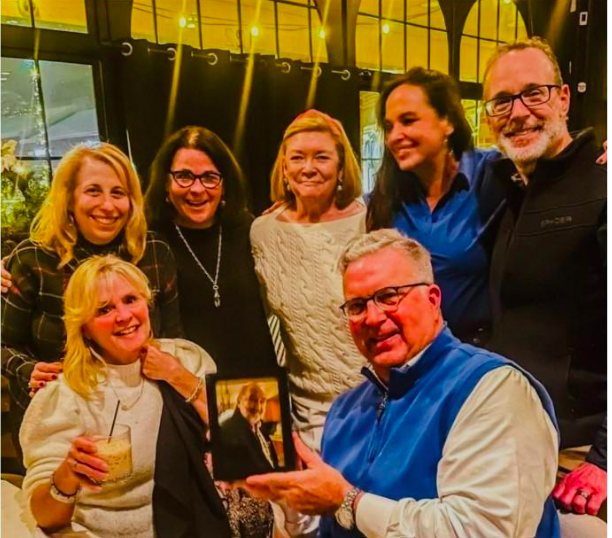
The annual Buffalo Renaissance general meeting never disappoints
Shared Interests and Lighthearted Joy
Sam’s Club: “Healthcare meets humor—where insights flow, and relationships grow.”
This eclectic group of healthcare executives—CEOs, lawyers, physicians, PhDs, HR professionals, a judge, and administrators—thrives on blending lighthearted banter with deep professional insights. Think of it as part boardroom strategy session, part stand-up comedy show, where no topic is off-limits, and no punchline goes unappreciated.
At the helm is Mike Moley, wielding the club’s metaphorical gavel with a perfect mix of humor and wisdom, keeping our schedule—and occasionally our egos—in check. Whether we’re dissecting payer and provider networks or debating the best lunch spots (and whose turn it is to pay), Sam’s Club proves that even in serious industries, a good laugh can spark innovation and foster meaningful connections.
The Sam’s Club annual black tie gathering is always a festive setting approving new members
6
Former Colleagues, Forever Friends
The Little Rascals: “Building a business, creating bonds—one late night at a time.”
This group, made up of my original employees from AP Professionals, became much more than colleagues; they became family. Sheila O’Brien, my very first hire, was the glue that held us together in those early days. Together, we navigated the late nights, tight deadlines, and the countless “what-if” moments that come with building a business from the ground up.
Our journey didn’t end when the workday was over. Over the years, we’ve celebrated weddings, welcomed new additions to our families, and stood shoulder to shoulder at funerals, sharing both joy and grief. The bonds we built in the office evolved into something far deeper—an enduring connection that has lasted more than three decades.
Even as our professional paths shifted, the humor that got us through those hectic 90s remained a constant. From trading stories of our “war room” moments to reminiscing about those late-night brainstorming sessions fueled by coffee (and sometimes sheer panic), we’ve always found a way to laugh together.
Today, we gather less frequently and often enough with the same energy and appreciation. Whether it’s a birthday celebration or just catching up over dinner, the value of this group remains undeniable. The Little Rascals didn’t just help build a business—they helped shape a lifetime of memories and friendships.
Weaving Leadership, Purpose, and Values In many groups, my contributions have ranged from providing leadership and sharing insights gained over 30+ years of building a business to offering subtle value through storytelling, humor, and wisdom. Regardless of the nature of these contributions, the relationships I’ve formed have been deeply enriching and enduring. While some groups align effortlessly, others require effort to foster connection, but the value of these relationships always endures. There’s always a subject matter expert just a phone call away.
Purpose, Values, and the Future of Groups Reflecting on my journey, I realize how each group has added depth to my understanding of leadership and community. These experiences have shaped my worldview, layering lessons of resilience and collaboration. Looking ahead, I’m excited to continue forming and contributing to groups that balance shared and individual values, always building relationships that stand the test of time.
The Groups I Left Not all groups are meant to last forever. As values shift or dynamics change, stepping away can become the right decision for growth. These departures, however, have often been marked by mutual respect and understanding. Even when moving on, the friendships and connections often remain. Sometimes, alignment fades, and stepping away becomes necessary for everyone’s benefit. Each departure has reminded me of the importance of maintaining boundaries while seeking opportunities better aligned with evolving values.
Closing Thought As Pam Say’s book reminds us, gratitude is a powerful force. I’m thankful for every group, every lesson, and every shared purpose. To all those I’ve met along the way: don’t worry, you haven’t heard the last of me. There’s usually a good reason to light the fuse and reignite any group at any time—though some may need a little more coaxing (and maybe a few drinks) to get back into full swing. To my groups I haven’t heard from in a while, consider this your call to action. After all, what’s a reunion without a few embellished stories and exaggerated accomplishments? Call me when you’re ready for the encore! Whether it’s rekindling an old group or forming a new one, every great story deserves a sequel.
Mission accomplished: the Christmas cards are out! It’s no small feat—more like a marathon of creativity, logistics, and perseverance. First, there’s the final design, the anticipation of delivery from the publisher and the battle of the address list. I stay in my lane; the design is not in my job description—and never will be. Correcting addresses for the umpteenth time has become a holiday tradition in itself. List management is crucial: adding new friends, loved ones gone, and having that awkward “should we really still send them one?” moment.
Eloise might just make the Christmas card next year
And then, there’s the question: why do we send cards to old bosses or people we might not even like anymore? But isn’t that part of the season’s magic? The spirit of Christmas nudges us to rekindle connections, soften the edges of strained friendships, and perhaps even surprise someone who thought they were forgotten.
Next comes the production line: return address—front or back? Choosing the perfect Christmas stamp (adhesive or licked?). And wow, when did stamps get so expensive? Stuffing the envelopes with precision. And let’s not forget the dreaded envelope licking. Sorry, but those water contraptions? Useless. They warp the cards and steal the joy. Yes, licking is unpleasant, but tradition demands sacrifices. Paper cuts? They’re part of the journey.
And let’s call them what they are: Christmas cards. This widely celebrated holiday transcends borders and beliefs. It’s a shared tradition, a universal gesture of connection.
The silver lining of this annual ritual is reconnecting with friends and reflecting on those we’ve lost. Updating the list becomes a bittersweet exercise: deciding to keep one family member while leaving out another, or pausing to honor the memory of a loved one who’s passed on.
For me, the true joy comes from sitting side by side with my wife, assembling our cards while thinking of all the people who have touched our lives. And then there’s the incoming stream of cards! They arrive in a delightful variety of styles: updated family photos, handwritten notes, humor, and heartfelt messages. Some feature collages, while others stick to one perfect picture.
The big question: does the boyfriend or girlfriend make it into the photo this year, or are they left out? And, of course, the excitement when a new family member makes their debut on a friend’s card—a baby, a pet, or sometimes even a spouse who wasn’t there last year.
The mother lode usually arrives on December 22nd, with a flurry of deliveries that bring the kitchen counter to life. Then comes my favorite tradition: the annual “Best Late Card” award. It’s December 27th and we’ve already received five really good ones. It’s for the friend whose card arrives fashionably late, often with the disclaimer, “This year, we’re finally on time!”
Once Christmas arrives, the cards take on a new life. Displayed on the refrigerator, kitchen cabinets, or a special mantle, they become part of the holiday decor. Every visit to someone’s home becomes an opportunity to scan their display. Inevitably, there’s the moment when you spot an absence: “Wait—why didn’t we get a card from them this year?!”
And one of my proudest moments? Seeing our family card make it to the mirror of fame at my barber’s shop. It’s like a badge of honor, knowing our card sits alongside others in a place where conversations flow and connections are celebrated.
For me, the Christmas card represents more than just the joy of the season—it’s about connection. It’s a tradition that reminds us to pause and appreciate the people in our lives, to share laughter and memories, and to celebrate the love that surrounds us.
Happy Christmas—and may your cards be on time (or at least arrive with a fashionable excuse)!
I can still vividly recall the magic moment when I learned to read in the first grade. It was transformative—right up there with learning to swim or the thrill of riding a bike for the first time. It felt like unlocking a new world of possibilities. Yet, for much of my early years, reading didn’t take center stage. The only books I remember from grade school and high school were assignments like A Tale of Two Cities, which left little impression. To get by, I often relied on Monarch Notes. My early reading repertoire consisted mainly of sports biographies: For some reason the two I remember are a story about Bobby Chandler of the Buffalo Bills and another about Jerry Kramer’s Instant Replay: The Green Bay Diary of Jerry Kramer.” Co-written with sportswriter Dick Schaap, an account of his near-death experiences and life as a Green Bay Packer. Beyond those, reading didn’t play a significant role in my life—until my early thirties.
Everything Changed at Age 34 At 34, my perspective on reading shifted entirely. My business partner walked into my office with a eclectic stack of ten books as I navigated a one-year non-compete clause after leaving my job. With time to consider and grow, I turned to those books and found my world expanding. The first book I picked up was Harvey Mackay’s Swim with the Sharks Without Being Eaten Alive. I remember reading it during one of my daughter’s gymnastics meets, making notes on Mackay’s famed McKay 66 customer insights, and sharing them with my father, the consummate salesman.
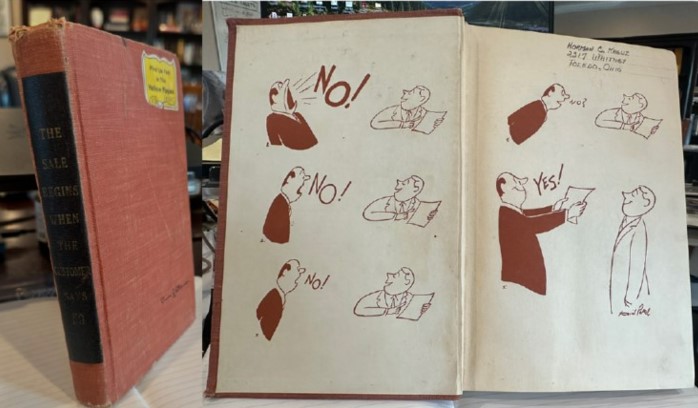
My dad then showed me the book he read, The Sale Begins When the Customer Says No, published in November 1953. The copy he shared, filled with humor and practical wisdom, offered a fascinating look at the sales principles he embraced in his career. This classic predates Harvey Mackay’s work and made me wonder if Mackay had drawn inspiration from it. Seeing the connection between these works reinforced the timeless nature of great ideas and their ability to shape generations.
That stack of books became a gateway to a new mindset. Titles like Seven Habits of Highly Effective People, In Search of Excellence, Swoosh: The Story of Nike and the Men Who Played There, and Herman Hesse’s Siddhartha inspired me to think deeper and apply their lessons to my life. That year helped me develop a habit of reflective, deep reading—equating insights from books to real-life scenarios. It truly was a new experience and my new walkabout was afoot.
A New Era of Reading Reading soon became a daily joy. Early mornings and airplane rides emerged as my favorite times to immerse myself in a book. A dozen or so friends of aspire to those peaceful, productive hours noted in my post on “The Early Risers Club.” I often reflect on how difficult it was to find quiet reading spaces during my high school years in a bustling household. Back then, the University at Buffalo Law Library became my haven for focused studying, even if it wasn’t traditional reading. Those moments honed my ability to concentrate and find value in written words.
Books That Stay, Books That Wait As I scan the shelves in my home, office, and Kindle history, I reminisce about the eclectic mix. Some books are unforgettable—like Ayn Rand’s Atlas Shrugged, a favorite that shaped my philosophical outlook and inspired its own dedicated article. It’s the only book I’ve ever read twice. After finishing it, I devoured The Fountainhead and watched the classic Gary Cooper adaptation. James Bradley’s The Imperial Cruise, Flags of Our Fathers, and The China Mirage, as well as Lawrence Wright’s The Looming Tower, were equally compelling, providing deep insights into historical and cultural contexts.
I also polished off McCullough’s John Adams and Harry Truman. McCullough’s depth of storytelling about generations past made me feel like I’d just completed a master’s class in U.S. history and almost finished with McCullough’s book about the Brooklyn Bridge. For that, I highly recommend all three books.
Some books, yet, stay unfinished. Titan: The Life of John D. Rockefeller, Sr. has eluded completion for five years, despite its fascinating content. I would’ve finished King Rat but I was channel surfing and came across the older movie version and that spoiled the rest of the mystery. Others, like A Man Called Intrepid, came into my life with a story of their own. A business partner’s unexpected departure prompted a friend to say, “The ones who stay are the intrepid souls.” That statement resonated deeply, compelling me to pick up the book. Then there are books like Rebel Ride that sit patiently on my shelf, waiting for their moment. I’ve often heard excerpts about Stonewall Jackson and wondered how the Civil War have unfolded had he not died in action.
The Erosion of Deep Literacy Adam Garfinkle’s article The Erosion of Deep Literacy helped me articulate the unique impact reading has on me. He defines deep literacy as the ability to engage with a text, anticipate the author’s direction, and connect it with personal knowledge to gain original insights. I often find myself doing just that—connecting characters and themes to real-life friends, colleagues, or situations. The article is worthy of a read for you deep thinkers so click here
Garfinkle also highlights how multitasking and screen use erode attention spans. While I occasionally pause my reading to research something sparked by a book, I’ve learned to embrace those moments as part of my curiosity-driven process. Still, I value the focused attention that deep reading requires, and I strive to cultivate it daily. My favorite digression is my Kindle’s access to a dictionary and Wikipedia.
Reading and Family Garfinkle’s assertion that shared reading builds a foundation for literacy resonates with me deeply. Cindy and I always read to our kids. Green Eggs and Ham was so frequently read to Kelly that she memorized it. One night, when I skipped ten pages while half-asleep, she immediately called me out. Today, our youngest would rather read a book than watch TV—a testament to the impact of those early reading sessions.
My mother-in-law, Gisela, is another source of inspiration. A devout reader, she once told me, “A good book is a great companion.” Her thirst for literature reminds me of historical figures like John Adams and Thomas Jefferson, who clamored for knowledge. Gisela’s love for reading has enriched my own appreciation for books as companions in life’s journey. If one of my books goes missing, I usually know where to find it.
Why I Keep Reading Books offer reflection, knowledge, and the joy of escaping into another world. Whether it’s Atlas Shrugged challenging my philosophy, Brooklyn Brifdge story on The Great Bridge drawing parallels between the Brooklyn Bridge and building a business, or Garfinkle’s insights about literacy, reading always teaches me something new. It’s a lens through which I understand the world and my place in it.
My library has also become a touchstone for connection. Office visitors often comment on the eclectic mix of books, sparking conversations that transcend the original context of their visit. It’s a reminder that books don’t just shape the individual—they also create opportunities for shared growth and understanding. I had the privilege of observing screenwriter Tom Fontana’s massive library, a collection I still talk about to this day.
Final Thoughts Reading has been a lifelong journey of discovery, from the first-grade magic of learning to read to the transformative moment at 34 that changed everything. Books are more than words on a page; they’re threads that weave together knowledge, relationships, and personal growth. Each one carries a story—how it came into my life, how it influenced my thinking, or how it waits patiently for its turn. Through them, I’ve learned that every story, like every life, holds lessons worth discovering. There’s always room for a constant companion—that being a good book.
So, when you’re done with Jake from State Farm and his late-night, “What are you wearing, Jake?” commercials, and you’re still basking in the peaceful solitude of an early morning, why not pick up that book you’ve been meaning to finish? Who knows, it can just offer more wisdom than any ad for affordable insurance.
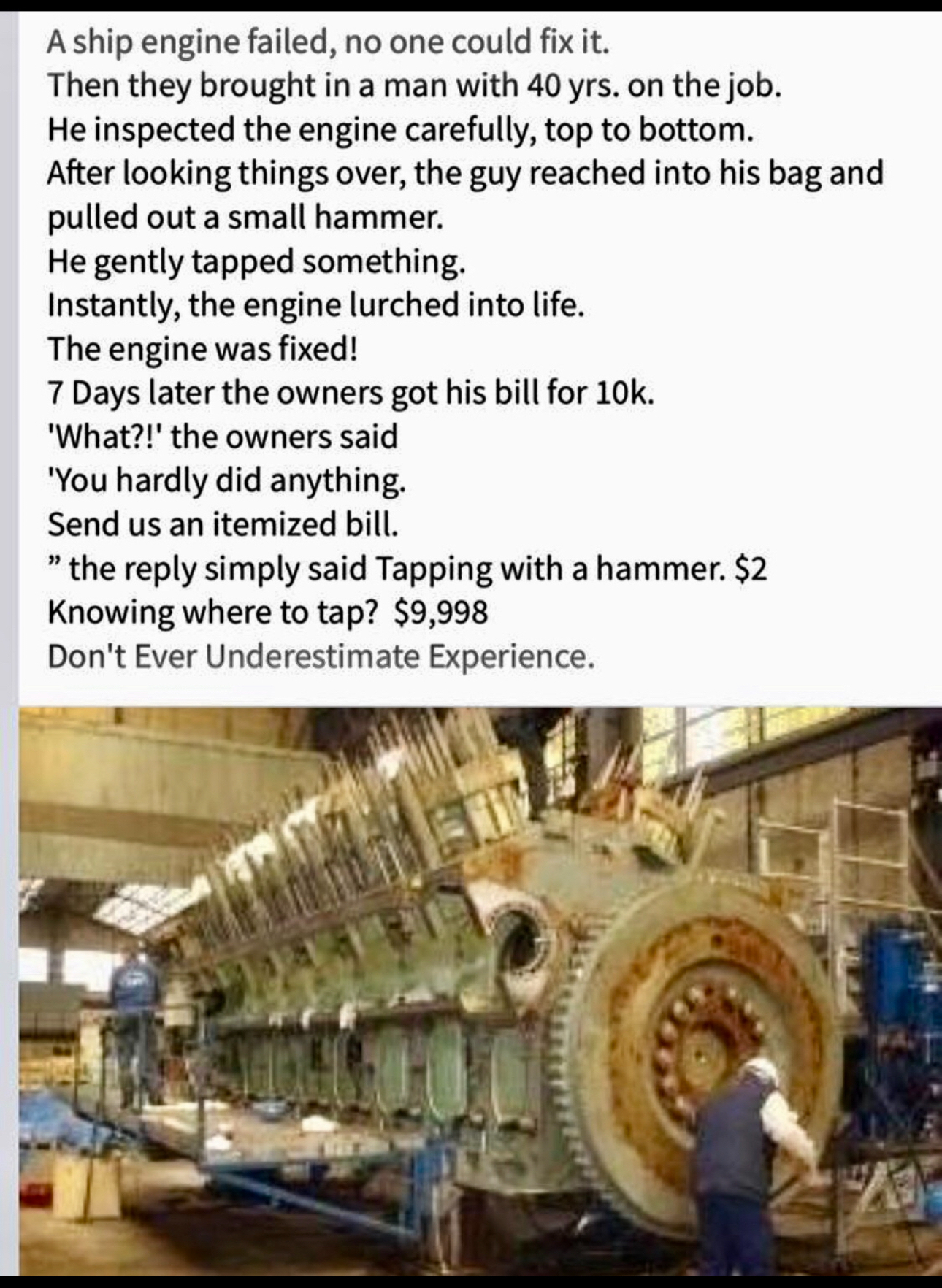
I’ve been circulating a cartoon for years highlighting the value of anyone paid a fee for services rendered. And just recently I read an article about an expert who fits the cartoon. Together, the cartoon and the article inspired these thoughts and this perspective. There are moments in every profession when clients realize, “When you need me, you need me.” It’s that simple. Sometimes, you need a specific solution, or things just go wrong. When they do, people look for that one person who brings years of experience, a steady hand, and the knowledge to make things right. I’m often reminded of this through three favorite examples: the cartoon featuring an engine repair expert who knew “where to tap,” the story shared by Froma Harrop about her plumber husband, and a personal experience from my friend Ron Papa, third-generation CEO of National Fire Adjusters. Ron and I are always on call. These examples perfectly capture why, in so many fields, people reach out to trusted experts, knowing they’ll get things back on track.
Take Froma Harrop’s story of her husband, a master plumber. When something breaks in the house, her friends and neighbors reach out to him—not just because he’s skilled, but as she writes, because they know he’s “the guy” who can fix it with precision and honesty. Similarly, the ship repair expert doesn’t charge for the act of tapping but for knowing exactly where to tap—a knowledge earned over years. These stories remind us that expertise is more than just visible effort; it’s about the understanding and intuition that only come with experience.
Then there’s Ron Papa, whose perspective adds a layer of commitment to this idea. As he says, “For seven decades now, since my grandfather started NFA, we chase disasters and offer solutions in times of catastrophe and duress. I keep a suitcase in my trunk and am available 24/7/365.” In fields like his, being ready to respond in moments of crisis defines the value of a true expert.
In many professions, clients often ask, “Why should I pay for this?” or “Can’t I do it myself?” But when the stakes are high, timing is critical, or the problem needs a quick and reliable fix, that’s when clients turn to professionals who deliver not just a solution, but peace of mind. Paying for knowledge—for knowing where to tap—is worth every penny when you’re in a bind.
It’s worth noting that many experienced professionals balance their work with goodwill and don’t always charge for every service. They understand that sometimes a favor today leads to future opportunities, and not every call needs to end with a bill. But when a fee is appropriate, it’s an investment in peace of mind and expertise—whether it’s a donation to your local fire department for the reassurance that they’re there when you need them, or paying an engine repair expert for knowing precisely where to tap. The fire department donation, modest as it may be, can be viewed as a fee—a proactive investment in readiness—while the engine tap fee is a classic example of paying for expertise.
Here are a few reasons why clients seek out these experts:
When They’re in a Bind: Sometimes, clients have urgent needs, whether due to an unexpected issue or a tight deadline. I often compare this to the fire department passing around a donation boot. You don’t need them every day, but when you do, you need them urgently. “You don’t need me now,” they seem to say, “but when you need me, you need me.”
For Access to Solutions Beyond Their Reach: Experts bring years of cultivated relationships, specialized tools, and industry know-how, which allow them to tackle issues that would otherwise seem insurmountable. Their network and expertise make them invaluable when unique challenges arise.
To Gain a Trusted Advisor: Part of the value an expert brings is their knack for listening and asking the right questions, helping clients understand deeper issues. It’s often about more than just the immediate task; it’s about offering insights into character, integrity, and values that help shape a better outcome.
So, when I say, “When you need me, you need me,” it’s about being more than just a problem-solver. It’s about delivering confidence, trust, and, let’s face it, a bit of humor when things go sideways. After all, even the most seasoned professionals know that sometimes, the real value is in making the hard stuff look easy. So the next time you find yourself in a bind, don’t hesitate to reach out. Just remember, you may be paying for that little tap—but it’s a tap you’ll be glad you didn’t try yourself!
A donation in this instance is a fee and pays when you need these experts.
Guiding Generation Alpha: Wisdom and Legacy Across Seven Generations
One of my greatest joys today is observing my grandchildren, part of the newly emerging Alpha Generation. As I watch them navigate their digital world, I find myself reflecting on just how different my own childhood was at their age. The Alphas, with their iPads, smartphones, and access to artificial intelligence, are growing up in a world I could hardly have imagined. Their music, TikTok trends, and YouTube content create a cultural landscape that feels almost foreign to me, yet I find myself learning as they grow. Witnessing this interplay from a front-row seat is a joy, though keeping up with the ever-evolving apps and trends can be a challenge.
In today’s world, these generational differences are more evident than ever, especially as workplaces often include four to five generations working side by side. Understanding these differences is essential for both businesses and families. The future workforce, someday to be led by Generation Alpha, will face challenges unique to their digital upbringing, alongside the pressures many parents now navigate. The recent mental health concerns highlighted by the Surgeon General reflect a world where rising costs for health care, child care, elder care, housing, and groceries weigh heavily on families.
Eloise was named after Eloise
Reflecting on how things have changed, I’m reminded of our own family’s journey. We missed the joy of several traditional Easter egg hunts at my parents’ house, with family gathered around the table—travel tournaments seemed to outweigh family holidays as we headed in different directions. It was all part of the pursuit, but we sure did laugh at how things turned out! Yet, it’s in guiding the Alphas through these complex times that we have the opportunity to reinforce what truly matters—results, relationships, legacy, and values that stand the test of time.
Navigating a multigenerational world isn’t always easy. Each generation brings its own strengths, challenges, and distractions. My experiences spanning seven generations have taught me a lasting truth: while values and methods shift over time, the need to learn, adapt, and evolve remains constant. One of my biggest hopes is that today’s youth will continue the tradition of reading, deep learning, and curiosity, embracing both the digital and the tangible. This love for learning is something I share with my friend Kevin Quinn, who grew up with a strong encouragement to read.
These days, kids are stuck on smartphones and iPads, playing their own mind-consuming games rather than reading or playing outside. Even colleges now include gaming centers to attract more game-centric students. I once asked Kevin, “I didn’t start reading until I was in my mid-30s. What propelled you to read?” He told me, “Joe, when I was a kid, if my dad was around and we were watching TV, he’d shut it off and say, ‘You have two choices: go read a book or go outside and play.’ Needless to say, when the weather was crappy, I’d read—and when it was nice out, I did a lot of playing.”
Whether it’s the resilience of the Greatest Generation, the tenacity of Baby Boomers, the adaptability of Gen X, the purpose-driven mindset of Millennials, the tech fluency of Gen Z, or the autonomy of Generation Alpha, what truly matters is the legacy we leave and the results we deliver.
Linda Ronstadt once said, “No one has connected one generation to the next better than the Eagles, better than any behavioral scientist can.” I have to agree. The Eagles’ music bridged generations when I was a teen; my kids love them, just as I do, while my grandchildren are more tuned into TikTok than classic rock—I’m fairly certain they have no idea who Don Henley is. Yet this ability to connect across generational lines speaks to a larger truth: while each generation’s methods may change, certain values remain constant—results, legacy, relationships, lifelong learning, and core principles.
Today, seven generations are thriving together, each leaving their mark on the world. One of my proudest moments was watching my Gen X daughter tell her Greatest Generation grandmother that she planned to name her soon-to-be-born Alpha daughter after her. Now, I watch my children—Millennials and Gen Z—guide and shape the values of their Alpha children, while we grandparents offer wisdom, support, and, occasionally, a bit of discipline.
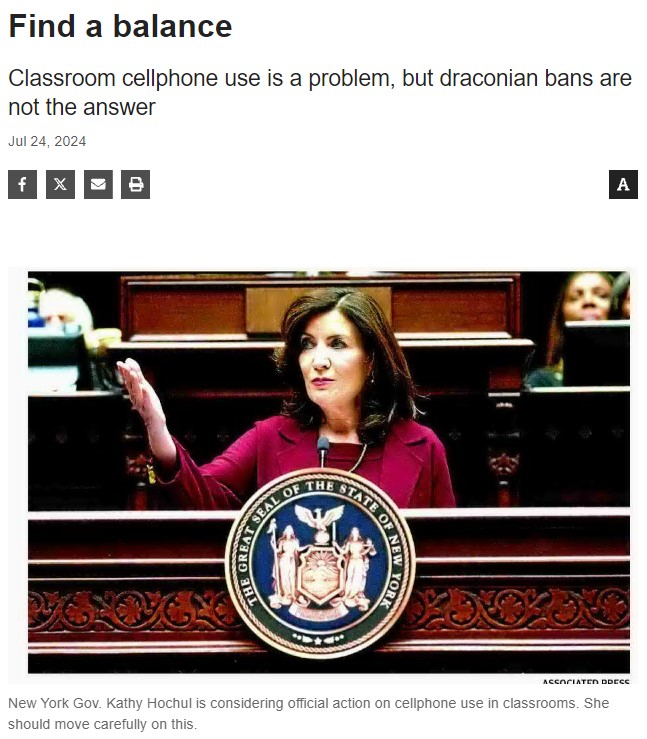
As I reflect on the evolution of workplace distractions from the 1950s to the present day, I can’t help but draw parallels to the growing concerns about cell phone use in New York State classrooms. I read an article in the Buffalo News editorial about the conundrum governor Hochul Cellphones at school faces with cellphones in the classroom. Every generation faces its own unique set of distractions, yet the challenge of maintaining focus and productivity remains a constant theme.
Growing up, I watched my father, a quintessential post-war provider, navigate his workday with the distractions of his time. He managed to balance his responsibilities, often indulging in the notorious three-martini lunches that were a norm back then. Despite these distractions, he was measured by his output, and he delivered.
Fast forward to my early career in sales during the Baby Boomer era. Distractions were different then. Our office had no desktop computers, just a simple word processor and a fax machine. My distractions were the occasional personal phone call or flipping through a Sports Illustrated magazine. We were taught to focus on one thing: getting results. The tools may have been limited, but our dedication to output was unwavering.
As the workplace evolved, so did the nature of distractions. Generation X introduced a new dynamic with their emphasis on work-life balance and technological savvy. They brought in a need for constant feedback and the free-agent mentality of job hopping. Yet, even with these changes, the goal remained the same—producing results.
Enter the Millennials, now the largest generation in the workforce. They bring their own set of workplace norms: cell phone lockers to eliminate distractions, pets at work, and flexible work environments. Despite these shifts, one thing remains unchanged—output is what counts. Millennials are tasked with repairing the damage done by previous generations while adapting to an ever-changing technological landscape.
This brings me to the current debate about cell phones in classrooms. Just as workplaces have adapted to the presence of smartphones, schools are now grappling with how to manage these devices. The concern is that cell phones, while powerful tools for learning, can become major distractions if not properly regulated. It’s a familiar challenge—balancing the benefits of technology with the need to maintain focus and productivity.
In both the workplace and the classroom, the essence of the challenge is the same: how do we harness technology’s potential without letting it undermine our productivity? My experience across different eras in the workplace has shown me that while the nature of distractions may change, our response to them must be adaptive and focused on outcomes.
Personally I have the support of my two new assistants, Chatty Kathy and Oncall Carl. These AI-powered helpers cost me only $20 per month, and their non-confrontational and refreshing perspectives have been invaluable. They ensure I stay focused and productive, embodying the timeless essence of output that has guided my career.
As we move forward, whether in the classroom or the boardroom, we must continue to find ways to integrate technology meaningfully while setting boundaries to ensure it enhances rather than hinders our productivity. After all, the measure of success remains consistent across generations—output.
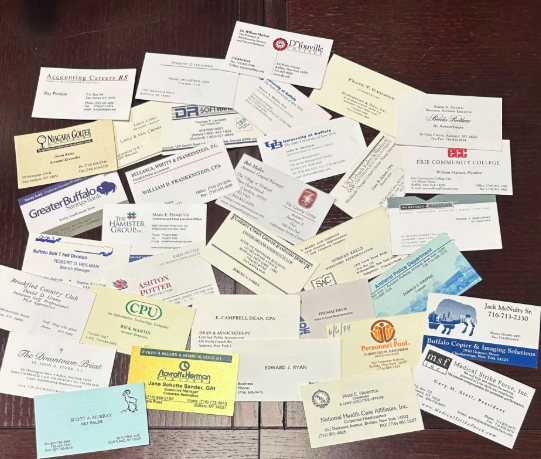
The year was 1981, and I had just begun my business journey. I remember it clearly—sorting through a growing pile of business cards. Before long, I realized they were more than just cardstock. To me, they were symbolic tokens—representing handshakes, introductions, and moments of significance. In some ways, they held more meaning than my childhood baseball cards.
My first job in sales lead me to collect business cards and my network took off.
Business cards have always been about connection and commerce. Like the ancient merchants of the Nile, modern professionals use these little rectangles to forge relationships and mark the beginning of something more. They’re not just a formality—they’re often the first impression and, sometimes, a lasting legacy.
And then there are the taglines. All of my early employers had one. My favorite was centered around relationships. Much like Ford’s “Built Ford Tough” or Milton Glaser’s iconic “I Love NY” campaign, it reflected a deeper commitment—relationships built on trust, respect, and shared success.
Before email, LinkedIn, or digital contact-sharing, the business card was the centerpiece of networking. The creativity behind those cards said a lot about the person and the business. They weren’t just functional—they were an art form.
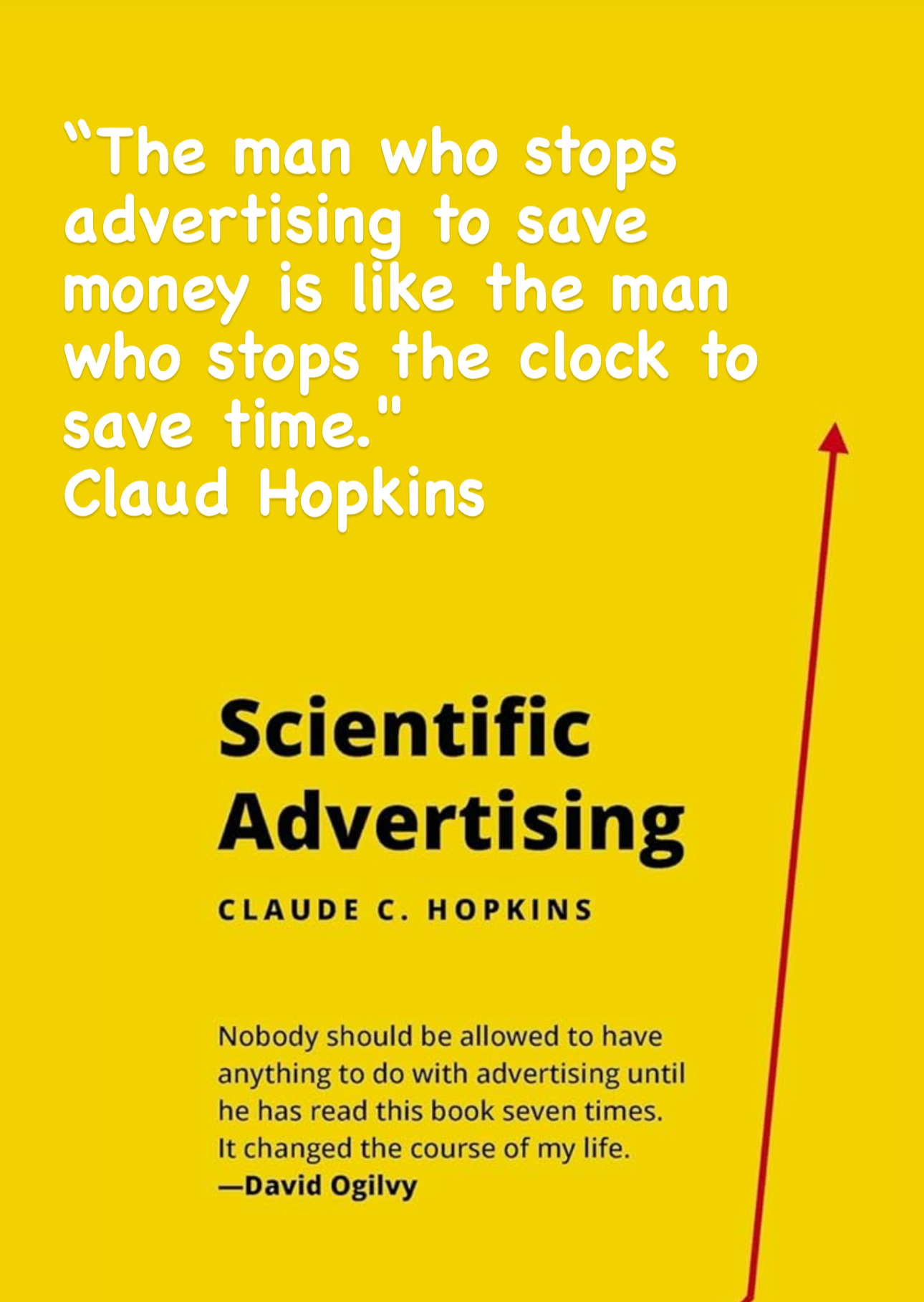
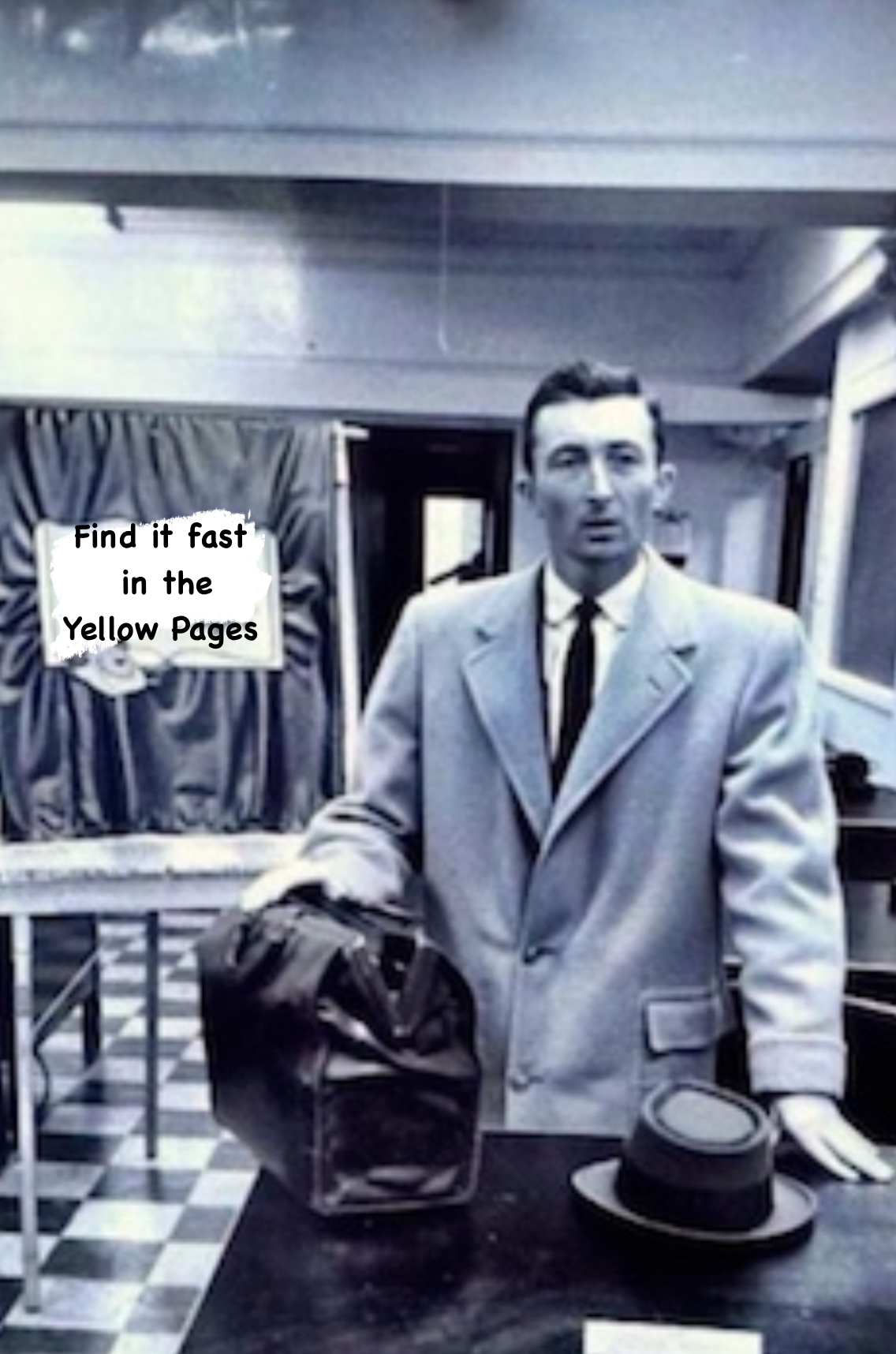
My father understood branding well. His Yellow Pages ad read simply: Find it Fast in the Yellow Pages. It reminded me of the timeless principles championed by advertising greats like Claude Hopkins and David Ogilvy—clarity, simplicity, and consistency. That mindset shaped much of my early career. Now, that’s become Artificial Intelligence—where clarity, speed, and targeting are the new watchwords, but the principles of connection remain the same.
Fin it fast was replaced by search engines now replaced by ChatGPT
Business cards also carry personal meaning. I’ll never forget my trip to Hong Kong, where I learned the cultural significance of presenting a card with both hands—a gesture that signals respect and commitment. What might seem like a simple exchange here becomes a meaningful ritual elsewhere.
Over the decades, I’ve collected thousands of business cards. Each one is a chapter—a snapshot of a relationship. Sorting through them today is like flipping through a scrapbook. Some are from people who have passed on, but their legacies live on through the connections we shared.
Many memories and great stories.
The cards I’ve kept tell stories of trust earned, deals struck, partnerships formed, and lessons learned. What began as a professional habit has become something deeply personal. Each card reflects a shared moment—of connection, achievement, or growth.
Even in a digital world, business cards haven’t lost their charm. They still serve as a branding tool and a statement of identity. Whether minimalist or elaborate, a card often encapsulates who you are and what you stand for.
Take a moment to reflect on your own experiences with business cards. What do yours say about you? What stories do they hold? Maybe we should even start a tradition—an annual award for the most creative card.
Just as my mom typed term papers at our kitchen table and my grandparents kept meticulous farm records, business cards represent effort and intention. They reflect values passed down through generations: hard work, pride, and the importance of meaningful relationships.
Let’s be frank—no one’s going to wax nostalgic about a collection of QR codes. But those faded cards in your desk drawer? They tell a story. One worth remembering.
There’s a quiet moment each day before the world wakes up—a thin slice of time that belongs to no one but you. For as long as I can remember, that hour has been my family’s anchor. I’ve come to call it “The Early Risers Club.” There’s no membership card and no rules, but the lessons behind it have shaped my life.
My earliest memories of mornings go back to my grandparents’ farms and to my dad, who grew up outside Toledo, Ohio. Before dawn, while most children slept, he was feeding livestock, gathering eggs and starting a long walk to school. It wasn’t glamorous or easy, but it instilled responsibility, discipline and purpose.
When I was a kid, those values showed up differently. Our mornings started early whether we liked it or not. Later, as a teenager, I delivered newspapers, a job that demanded consistency. You couldn’t hit snooze if the paper had to be on the porch before sunrise. Weather didn’t matter; the job had to get done. Looking back, those were some of the most formative mornings of my life.
What I didn’t realize then was that routines like these were laying a foundation. Like many habits we inherit from our parents, I didn’t appreciate their impact until years later.
Today, rising early isn’t about chores or paper routes. It’s about clarity. In those predawn hours, the noise of the world hasn’t started yet. There are no emails, no meetings—just space. The kind that lets you think, read or simply breathe.
People often ask how I find time to read so much. The answer is simple: I wake up early. Long before the day begins, I’ve already put my mind to work. Reading centers me and makes me more present for whatever comes next.
But the Early Risers Club isn’t really about productivity; it’s about presence. It reminds us that we choose how we start our day. Do we begin in reaction to the world, or with intention?
Friends and colleagues tell me they rely on the same principle: a workout, a book, a quiet moment of reflection or simply enjoying the stillness. The activity varies, but the effect is the same—starting the day on your own terms steadies everything that follows.
I think often of my family in those early hours. My dad passed not long ago, but I still hear his quiet steadiness in the morning silence. He never chased recognition. He believed in showing up, doing the work and treating people kindly. He didn’t give speeches about discipline—he lived it.
And that’s the real gift of the Early Risers Club: it connects you to the people who shaped you. My family didn’t explain their values; they demonstrated them. Each morning, I feel a little closer to them.
In a world filled with distraction and noise, maybe what we all need is a moment of stillness before the demands pile up—a chance to think about who we want to be and how we want to show up for others.
Whether someone wakes at 5 a.m. or 8 a.m. doesn’t matter. What matters is carving out a moment of intention before the day pulls you in a hundred directions.
The Early Risers Club isn’t exclusive. Anyone can join. All it takes is reclaiming the first few minutes of your day and filling them with something meaningful. For me, it’s a tribute to my family. For others, it may be something different. But the benefits are universal: clarity, intention and gratitude for those who shaped who we are.
And if all else fails, you can always call Jake from State Farm. He’s up early, too.
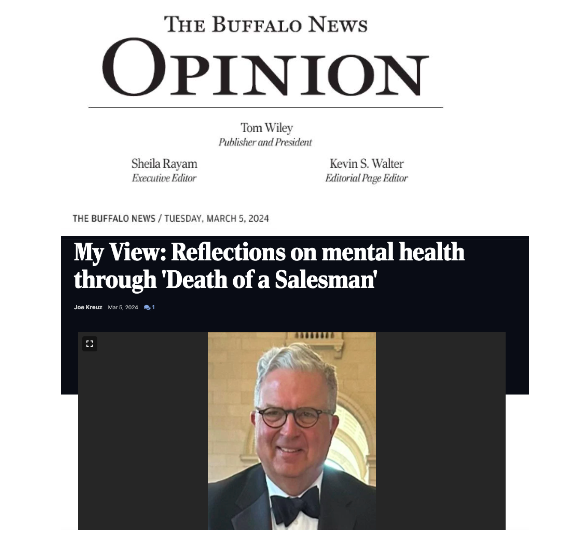
Revisiting Death of a Salesman, a play I first encountered in high school 46 years ago, has provided me with a fresh perspective amid our current mental health crisis. Arthur Miller’s portrayal of Willy Loman’s tragic struggle underscores the devastating impact of unaddressed mental illness and the silent battles many continue to face.
Arthur Miller adeptly illustrates Loman’s inability to cope with change and personal crises, symbolized by the rubber hose — a poignant emblem of the internal struggles associated with mental health.
Considering this, I contrasted Loman’s despair with my father’s resilience through numerous career challenges. In 1949, when Miller penned the play, my father was 22, freshly returned from serving in the navy during WWII. My reflections on the play highlighted stark differences in handling adversity, not just between Loman and my father but also within broader society. My father’s mindset, treating each obstacle as a “mere speed bump,” vividly contrasts with Loman’s spiral into hopelessness.
The play brings to light the societal stigma surrounding mental illness, a significant barrier preventing many from seeking the help they need. This stigma exacerbates isolation and despair, emphasizing the urgent need to shift our perspective and treat mental illness with the empathy and seriousness it deserves.
Despite advances in understanding mental health, the stark reality depicted in Loman’s narrative remains all too prevalent. The initiatives by friends at organizations like Save the Michaels and BryLin Hospital, alongside countless others addressing mental health challenges, underscore the critical need for proactive engagement. Their work illuminates the extensive network of available resources, as well as the existing gaps in accessibility and acceptance.
My father’s resilience was significantly bolstered by a robust support system of family, friends, and colleagues. This network was pivotal in enabling him to navigate life’s challenges. The importance of such support is immeasurable, acting as a vital lifeline for many grappling with mental health issues.
Death of a Salesman serves as a profound meditation on human psychology and mental health, showcasing the vital role of literature in dissecting the complexities of the human psyche. It underscores that empathy, understanding, and support can profoundly influence those struggling with mental health issues.
Faced with modern challenges like the opioid epidemic, the aftermath of Covid-19, escalating military suicide rates, and pervasive isolation, prioritizing mental health on par with physical health is imperative. We must cultivate environments where individuals feel empowered to discuss their struggles openly, fostering a culture of inclusivity and support.
The aspiration for a future where mental illness is destigmatized, enabling individuals like Loman to receive the support they need, is more essential than ever.
Let’s commit to action and solidarity, striving for a society where no one endures their darkest moments in isolation. Recognizing these silent struggles, we can advance towards a future where mental health is prioritized and stigma is dismantled.
Author’s Note:
This piece was inspired by a Christmas gift—Leo Pusateri gave me Arthur Miller’s Death of a Salesman. Rereading it decades later struck a chord and prompted the reflection you just read. A special thanks to both Leo and John Connelly, whose insights and shared stories about our fathers—each shaped by common values and life lessons in resilience—helped bring clarity and purpose to this essay.
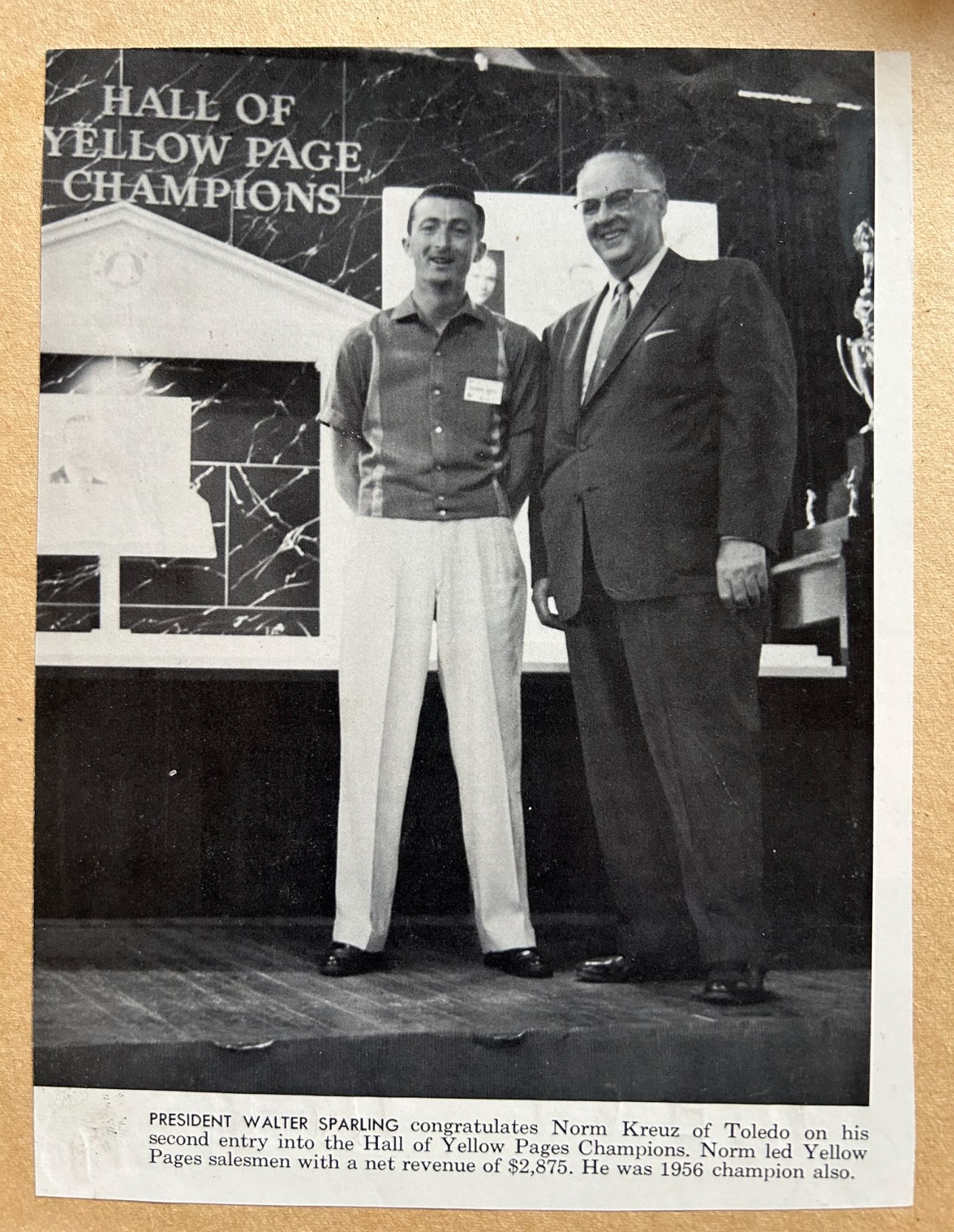
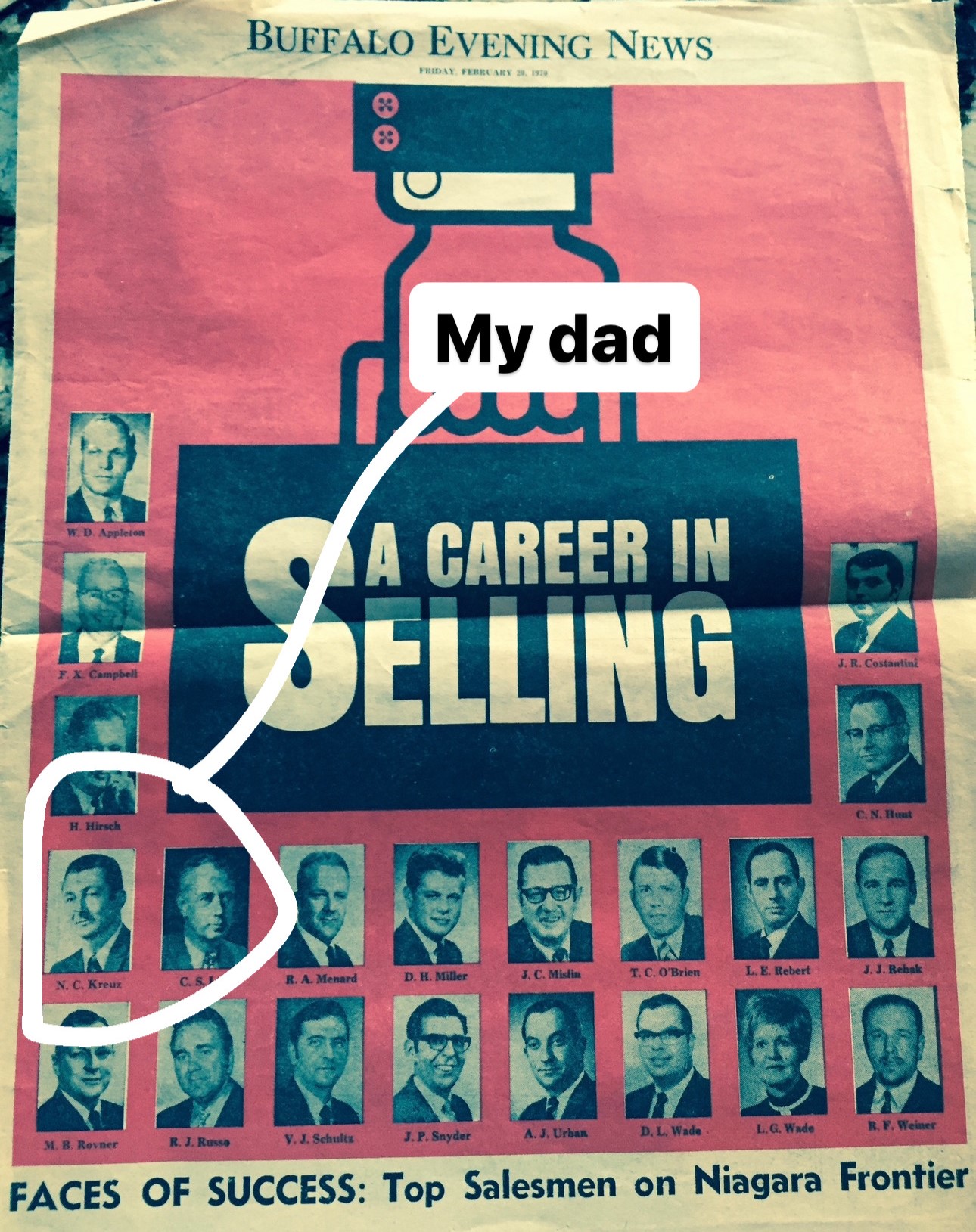
My dad was getting sales awards at ayoung age well before I was born.Mike Fitzpatrick and Bruce Halpern. Norm mentored them and they were Employees of the year 1992My dad carried the bag, was a snappy dresser and the consummate salesman.









 josephkreuz.com