What’s most enjoyable about life is that, on a daily basis, there are opportunities to meet new people. Human connection is at the heart of what makes life meaningful.
Yet we now live in an era where artificial intelligence is advancing at a pace few could have predicted. Photos are enhanced, voicemails generated, emails auto-written—entire video chats can now be convincingly faked. You can’t always trust your eyes—or your ears. So what do we trust?
What we’ve always trusted: the power of real, human relationships.
People have spent entire careers building, protecting, and nurturing relationships. Traders, artisans, the Fuller Brush salesman, the Avon Lady, the milkman, the local catalog rep—they brought more than products. They brought presence, personality, and trust. Whether it was a vacuum cleaner demonstration in the living room, a catalog left at the kitchen table, or a familiar face behind a longtime Elmwood Avenue storefront, these interactions were built on familiarity and connection. That legacy of human interaction is back at center stage. The handshake still matters. A face-to-face still wins the room. A coffee chat, a raised eyebrow, an offhand comment—all of those tiny, unprogrammed moments build rapport in ways no machine can replicate.
AI might be getting better at sounding human. But it’s still not being human.
AI-generated content—especially video and audio—will soon be so realistic, we won’t be able to tell what’s real and what’s fake. We’re on the brink of a new era of false perception and digital deception. For those who remember, Milli Vanilli was the Grammy-winning duo exposed for lip-syncing the songs that made them famous. When the truth came out, their careers collapsed.
In that spirit, an old advertising slogan feels more relevant than ever: Is it live, or is it Memorex?
That question is now front and center. Is what you’re seeing real—or just programmed to feel real?
There’s no question that AI has its place. It can process data, sketch ideas, and help refine language. But a tool is not a substitute for the talent—or the truth—behind it. What makes writing powerful, and work meaningful, is the human experience at its core.
We’re just a few years removed from the pandemic, when the world retreated into screens and home offices. For many, loneliness, mental fatigue, and isolation left lasting scars. In this post-COVID era, something powerful is reemerging: a hunger for authentic, in-person connection.
It’s showing up in meetings, networking events, and even casual run-ins at the grocery store. People want to reconnect—not just via a screen, but face to face. They want to see your smile, shake your hand, hear your voice. As trust in digital reality fades, trust in real relationships grows stronger.
This shift is also reshaping the workplace. Not long ago, many believed remote everything was the future. But now? Companies are calling people back—not just for productivity, but for connection. Culture doesn’t live in Slack messages. Loyalty isn’t built on Zoom. On Zoom, you can wear a tie and gym shorts; in real life, you wear the whole suit. Mentorship doesn’t happen in emoji reactions. Human presence matters.
Young professionals—those just starting out—are learning that what you know is important, but who you know—and how you treat them—matters just as much. Every relationship opens a door. Every meaningful connection leads to more. And the beauty of that principle? It never goes out of style.
No robot will ever replicate the nuance of a first impression or the feeling of being seen. No one walks away from a great meeting saying, “Wow, that Zoom background really moved me.” But plenty walk away thinking, “That person just gets it.”
As we enter an age of digital doubt—where even voices and videos may be faked—something simple is becoming rare again: authenticity. Cybercrime is rising fast, and trust is being exploited in new ways. Don’t hit “send” on that wire transfer until you’re certain the voice, face, or email on the other end is who they say they are.
That’s why the relationship economy is entering a renaissance. People will increasingly place value on realness. They’ll hire for it. Vote with it. Partner because of it.
If you’re fortunate enough to have strong relationships in your life, tend to them. And if you’ve been hiding behind screens or texts, show up. Shake hands. Ask questions. Listen closely. Connect deeply.
And the next time a perfectly polished message or AI-generated voice crosses your screen, ask yourself:Is it live—or is it Memorex? If it’s real, you’ll know.
What’s a group, you ask? Think of it as the ecosystem of your life—personal friend circles, professional associations, golf groups, happy hour huddles, clubs, boards, book clubs, and yes, those endless group chats where 90% of the content is memes, and the other 10% is someone asking, “What’s the plan?”
If only Android and iPhone would let you name these text groups, right? It’s a tragedy on par with daylight savings time, which is still confusing clocks and calendars everywhere. But let’s not dwell on tech shortcomings—this is about celebrating the joy of connection, the lessons we learn from each other, and the sometimes ridiculous (but always memorable) dynamics that emerge when people come together. Groups can also play a vital role in mental health, providing support, therapy, and a sense of belonging.
This post isn’t just about my groups—it’s about your groups too. It’s about celebrating the joy of connection, the lessons we learn from each other, and the sometimes ridiculous (but always memorable) dynamics that emerge when people come together. My inspiration? Pamela Say, author of Waking Up Grateful. Pam introduced me to the Social Change Model for Leadership Development she discovered while on walkabout at a UCLA think tank, an idea that sparked memories of all the groups that have shaped my journey.
Let me warn you: this isn’t just a nostalgic walk down memory lane. By the end, you’ll probably find yourself reflecting on your own groups—those you cherish, those you’ve left behind, and maybe those you’re overdue to reconnect with. Consider this your group therapy session, with a side of wit and wisdom.
Chapter one of AP Professionals and enduring get togethers
Key Takeaways from That UCLA Think Tank
Pam’s insights on the Social Change Model of Leadership Development offered two enduring lessons:
Shared Purpose Drives Connection: Groups thrive when members align under a common goal while embracing each other’s unique strengths and values.
Growth Sometimes Means Letting Go: Recognizing when it’s time to move on is as important as joining. Some groups, like relationships, naturally run their course.
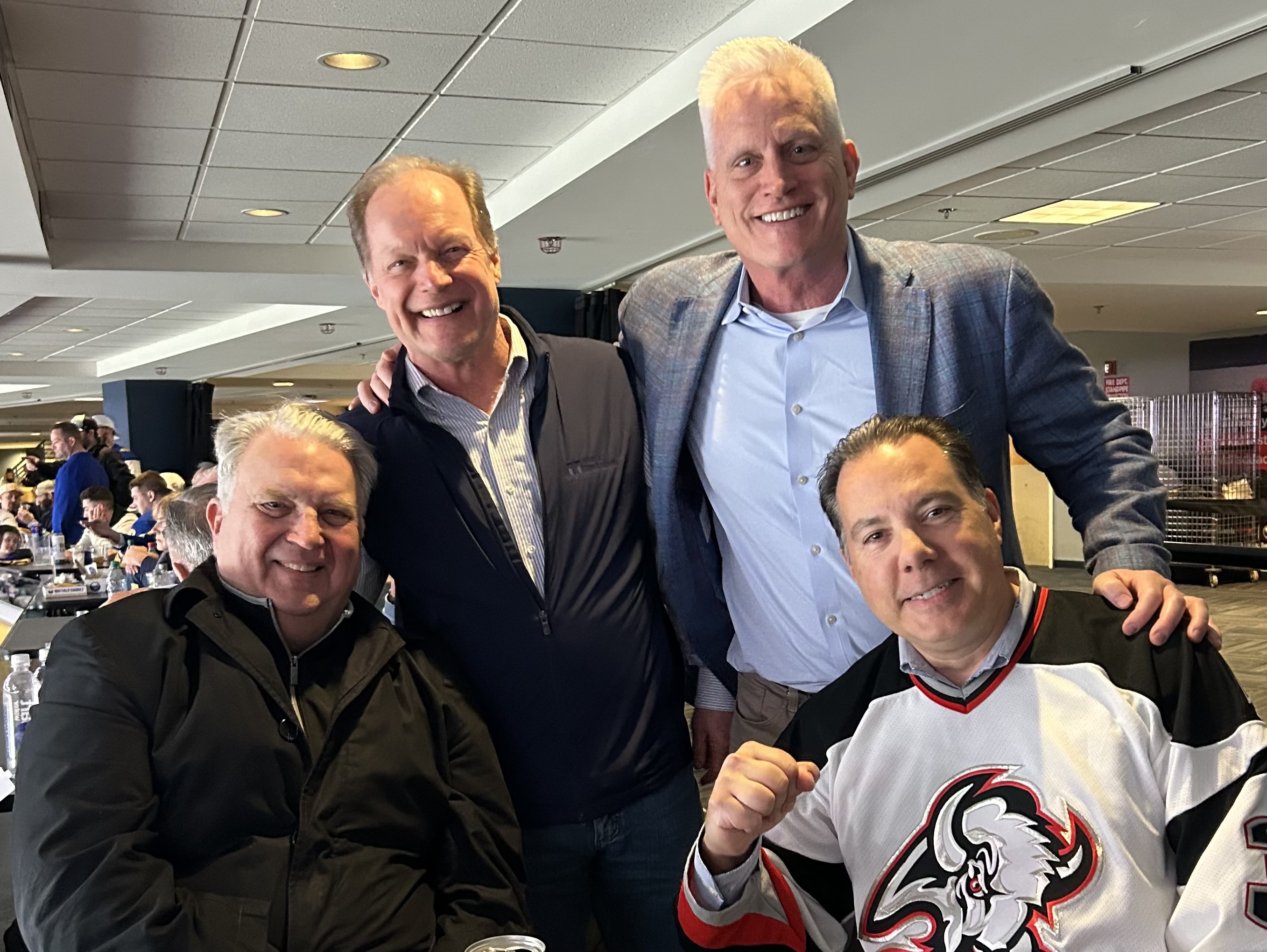
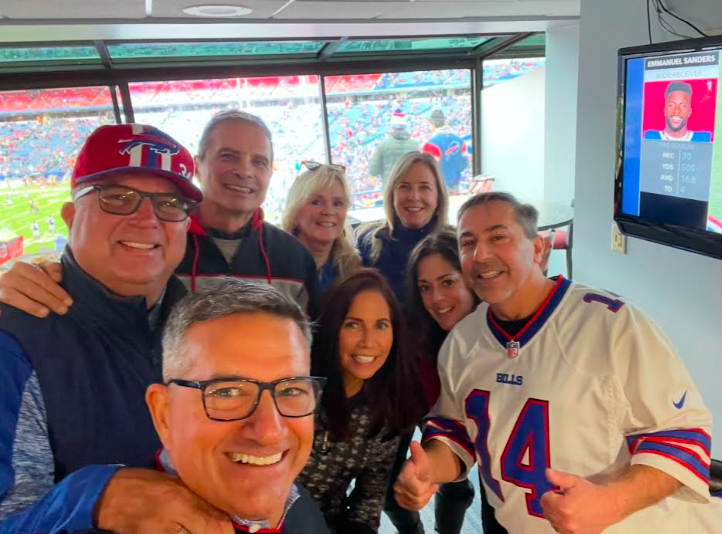
These ideas became a lens for revisiting the countless groups I’ve been part of—from little league football to professional networks. Each one taught me about relationships, resilience, and the importance of boundaries. My newest group was the highlight of the winter — gathered at a Buffalo Sabres game with Rick Hamister, Wayne Keller, and Nick Tzetzo. Nick stole the show in his classic Dominik Hasek jersey.
Rick Hamister, Wayne Keller, Joe Kreuz, and Nick Tzetzo at a Buffalo Sabres game — Nick arriving in a classic Dominik Hasek jersey and stealing the show. Some groups are just getting started.
Groups that forged my earliest bonds and taught me the value of collaboration and camaraderie.
Foundations of Friendship and Teamwork “From the field and the fairways to the future—where teamwork never ends.”
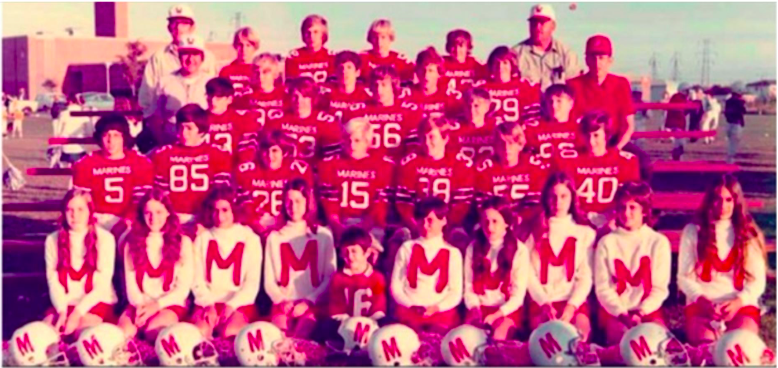
My journey began with my 7th and 8th grade little league football team, the “Marines.” Formed in 1971, this group instilled shared values of teamwork and friendship. Decades later, a vintage team photo and a lively group text keep those memories alive. It was my first experience with a group united by a shared purpose—learning football, winning championships, and fostering camaraderie.
Our team was guided by four eclectic coaches, each playing a meaningful role. Among them was Orkie Brown, our fitness coach, who ran the daylights out of us before and after practice. In those pre-Gatorade and water bottle days, we stood in line at the drinking fountain and water hose, further cementing our bond. We won a few championships, and I’ll admit to embellishing a story or two about our dominance over the years.
The Marines 1972
Fast forward to high school, and the Williamsville South High School Golf Team and University of Buffalo Golf team became another source of enduring friendships. Three years undefeated, three friends for life—our team wasn’t just about birdies and eagles but about building bonds that have stood the test of time. Whether on the course or in life, Rich Weber, John Gaffney, and I remain connected, even standing in each other’s weddings. Decades later, we’re still enjoying the links together, reliving the glory days with every round.
Professional Circles
Groups that shaped my career, offered mentorship, and inspired professional growth.
PriceWaterhouseCoopers (PwC) Alumni and the Pen Club “From the past to the present—connecting legacies, one swanky pen at a time.”
I owe my connection to the PwC alumni group to my mentor, Gary Stott, who introduced me to this circle of friends he had worked with out of college. Over the years, this group has remained a constant source of camaraderie and professional insight. At the 2024 PwC alumni golf outing, I was honored to be made an official honorary member—a testament to the enduring bonds formed through shared experiences.
The Pen Club, a subset of this alumni network, emerged during a dinner where I handed out some of my swanky company pens. The name stuck, and the group became its own unique gathering, rooted in shared values and lighthearted traditions. Whether on the golf course or around the dinner table, these groups continue to be a meaningful part of my professional and personal life.
And the Ernst and Young group dubbed the Caddyshack group offers further banter and story after story. Just stay away from the Zin.
The Pen Club get togethers never disappoint
Intellectual Exploration and Deep Conversations “Exploring ideas, igniting intellect, and dancing through life’s lessons.”
Intellectual groups have been a cornerstone of my personal growth, offering spaces for both philosophical debates and spiritual reflection. The Atlas Shrugged Society, inspired by my passion for Ayn Rand’s work, became a hub for deep intellectual exploration. Under the guidance of Alan Weisstein, PhD, as our Head of Wisdom and Intellect, the group challenges perspectives and fosters curiosity. Special thanks go to those who helped bring this group to life, making it a vibrant forum for thought and discussion.
Similarly, The Downtown Priest Committee, led by Father John G. Sturm SJ, added a spiritual dimension to intellectual engagement. Originating during my son’s time at Canisius High School, this group delved into Father Sturm’s teachings, often drawing on his book Life’s a Dance, Not a Dress Rehearsal. Together, these groups illustrate the value of ideas and the transformative power of shared learning.
Mentorship and Legacy Building
The Buffalo Renaissance Foundation: “Creating change, one charitable act at a time.”
This fraternal group, founded in the early 80s, has long been dedicated to raising and donating funds for charitable causes. I was fortunate enough to be invited in the mid-90s, and over 25 years later, I’ve had the privilege of witnessing its evolution into a multi-generational circle of philanthropy. Today, we’re a mix of Baby Boomers, Gen Xers, and Millennials, all working together to keep the faith, spirit, and mission alive—sometimes even agreeing on the same golf foursomes.
The group now boasts 70 members strong, with older members stepping back as “sustainers” to make way for fresh faces and new energy. Of course, the sustainers still have their say—they’ve earned it—and their stories often rival the length of our annual meetings. Our flagship events—the annual CEO awards luncheon and golf outing—are a blend of networking, inspiration, and the occasional good-natured debate about whose backswing needs the most work.
One especially memorable moment came during our tours of the Buffalo Bills and UB Bulls football operations. Members couldn’t resist hopping up to the podiums, striking poses in the locker rooms, and trying out the weight rooms—reliving their own glory days for a few unforgettable snapshots. It was a perfect example of the camaraderie and humor that define our group, even as we tackle serious charitable initiatives.
Whether it’s celebrating local leaders, teeing off for a good cause, or simply catching up over a round of drinks, The Buffalo Renaissance Foundation is more than a group—it’s a tradition.
The annual Buffalo Renaissance general meeting never disappoints
Shared Interests and Lighthearted Joy
Sam’s Club: “Healthcare meets humor—where insights flow, and relationships grow.”
This eclectic group of healthcare executives—CEOs, lawyers, physicians, PhDs, HR professionals, a judge, and administrators—thrives on blending lighthearted banter with deep professional insights. Think of it as part boardroom strategy session, part stand-up comedy show, where no topic is off-limits, and no punchline goes unappreciated.
At the helm is Mike Moley, wielding the club’s metaphorical gavel with a perfect mix of humor and wisdom, keeping our schedule—and occasionally our egos—in check. Whether we’re dissecting payer and provider networks or debating the best lunch spots (and whose turn it is to pay), Sam’s Club proves that even in serious industries, a good laugh can spark innovation and foster meaningful connections.
The Sam’s Club annual black tie gathering is always a festive setting approving new members
6
Former Colleagues, Forever Friends
The Little Rascals: “Building a business, creating bonds—one late night at a time.”
This group, made up of my original employees from AP Professionals, became much more than colleagues; they became family. Sheila O’Brien, my very first hire, was the glue that held us together in those early days. Together, we navigated the late nights, tight deadlines, and the countless “what-if” moments that come with building a business from the ground up.
Our journey didn’t end when the workday was over. Over the years, we’ve celebrated weddings, welcomed new additions to our families, and stood shoulder to shoulder at funerals, sharing both joy and grief. The bonds we built in the office evolved into something far deeper—an enduring connection that has lasted more than three decades.
Even as our professional paths shifted, the humor that got us through those hectic 90s remained a constant. From trading stories of our “war room” moments to reminiscing about those late-night brainstorming sessions fueled by coffee (and sometimes sheer panic), we’ve always found a way to laugh together.
Today, we gather less frequently and often enough with the same energy and appreciation. Whether it’s a birthday celebration or just catching up over dinner, the value of this group remains undeniable. The Little Rascals didn’t just help build a business—they helped shape a lifetime of memories and friendships.
Weaving Leadership, Purpose, and Values In many groups, my contributions have ranged from providing leadership and sharing insights gained over 30+ years of building a business to offering subtle value through storytelling, humor, and wisdom. Regardless of the nature of these contributions, the relationships I’ve formed have been deeply enriching and enduring. While some groups align effortlessly, others require effort to foster connection, but the value of these relationships always endures. There’s always a subject matter expert just a phone call away.
Purpose, Values, and the Future of Groups Reflecting on my journey, I realize how each group has added depth to my understanding of leadership and community. These experiences have shaped my worldview, layering lessons of resilience and collaboration. Looking ahead, I’m excited to continue forming and contributing to groups that balance shared and individual values, always building relationships that stand the test of time.
The Groups I Left Not all groups are meant to last forever. As values shift or dynamics change, stepping away can become the right decision for growth. These departures, however, have often been marked by mutual respect and understanding. Even when moving on, the friendships and connections often remain. Sometimes, alignment fades, and stepping away becomes necessary for everyone’s benefit. Each departure has reminded me of the importance of maintaining boundaries while seeking opportunities better aligned with evolving values.
Closing Thought As Pam Say’s book reminds us, gratitude is a powerful force. I’m thankful for every group, every lesson, and every shared purpose. To all those I’ve met along the way: don’t worry, you haven’t heard the last of me. There’s usually a good reason to light the fuse and reignite any group at any time—though some may need a little more coaxing (and maybe a few drinks) to get back into full swing. To my groups I haven’t heard from in a while, consider this your call to action. After all, what’s a reunion without a few embellished stories and exaggerated accomplishments? Call me when you’re ready for the encore! Whether it’s rekindling an old group or forming a new one, every great story deserves a sequel.



 josephkreuz.com