
Takers Finish Second
Life, I’ve decided, resembles an endless dinner party where the cosmic waiter drops the bill and studies the table to see who blinks first. In that moment we reveal ourselves. Most of us fall into one of three camps:
- The Reachers – wallets out before the ink on the subtotal is dry. They shoulder the cost and walk away with dessert, goodwill, and future invitations.
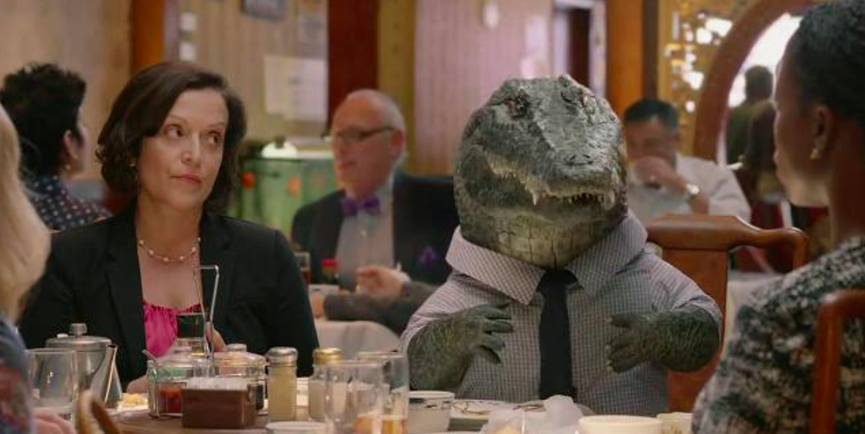
- The Alligator-Arms Crew – suddenly their limbs are too short to reach the check, just like the GEICO reptile. They finish—at best—second.
- The Stealth Benefactors – the Harvey-MacKay disciples who arrive early, slip the server a credit card, and let everyone else discover the bill is already paid. That textbook move from Swim with the Sharks Without Being Eaten Alive buys near-mythic status—and, quite possibly, a minor feast day in the group chat.
Four decades of business lunches, friendship dues, and parental negotiations have confirmed the pattern: givers keep winning, takers keep explaining, and stealth buyers are quietly canonized by everyone they treat.
Personal Lessons from givers and takers
A recent conversation with a friend sent me back to a spring break in Florida with my youngest daughter, Haylee. I handed her spending money at Charming Charlie’s, expecting a couple of souvenirs. She returned with a bag overflowing with trinkets—for her friends. That ten-year-old act of unprompted generosity reminded me that real giving expects nothing in return.
- Stronger academic performance
- Healthier relationships and habits
- Greater career success
The takeaway isn’t destiny; it’s discipline. Delayed gratification can be practiced and learned, just like generosity.
The Alligator-Arms Test (and Other Dinner-Table Shenanigans)
We’ve all witnessed the modern marshmallow test in the wild—usually around a restaurant table:
- GEICO’s “alligator arms” commercial nails it: the reptile’s limbs are conveniently too short to grasp the check.
- Then there’s the friend who always “needs the restroom” the moment the server arrives with the bill, returning just in time to thank the group for covering them.
Humor aside, those dinner-table dodge moves reveal more than penny-pinching habits; they spotlight a mindset. Givers see the tab as a chance to invest in camaraderie. Takers see it as a cost to be avoided.
A Quick Self-Check
Have I given more than I’ve taken? I ask myself that often, and I invite you to do the same. Scorekeepers—people who remember exactly who bought lunch last time—rarely create lasting value. Those who give freely, who appreciate instead of expect, enrich every room they enter.
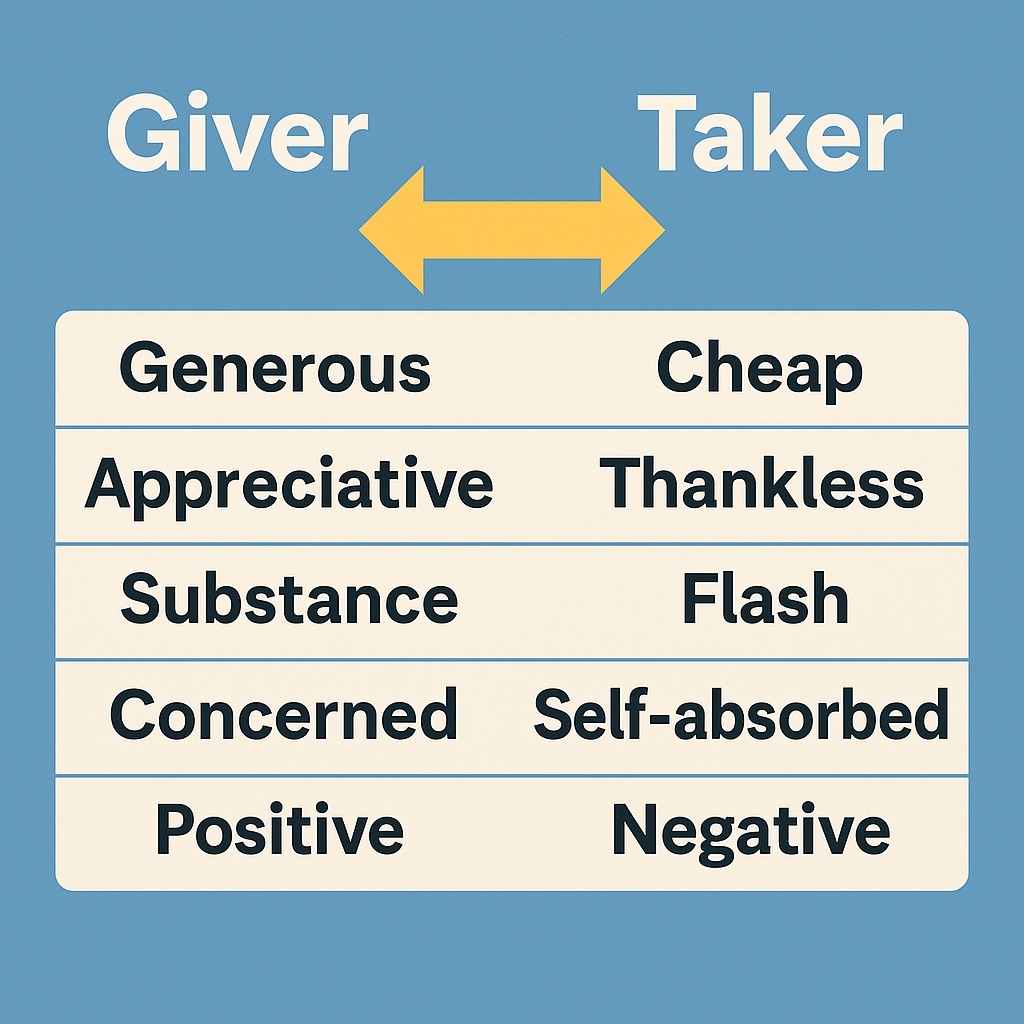
If you don’t like your position, one small act—an unsolicited thank-you note, a quiet favor, or picking up the tab without fanfare—can start nudging the needle.
Whether you’re structuring a partnership, nurturing a friendship, or coaching your kids, the give-and-take dynamic defines the culture you create. It’s not about tallying credits and debits; it’s about building relationships strong enough to thrive when times get lean.
So pause and ask yourself: Have I given more than I’ve taken? If not, what’s one practical way to flip that equation today? Feel free to share your thoughts—or just borrow mine and move on.
I’ll owe you one.
| Giver ↔ Taker | |
| Generous ↔ Cheap | |
| Appreciative ↔ Thankless | |
| Substance ↔ Flash | |
| Concerned ↔ Self-absorbed | |
| Positive ↔ Negative |
 josephkreuz.com